Design & Project Advisor
Tulio
Leads client consultation and product strategy for bespoke home textiles, translating spatial requirements, material finishes and interior context into end-to-end design solutions.
Devyani Singh · Selected practice 2012—Present
A twelve-year design practice spanning collection strategy, handcrafted surface, product development and creative leadership.
01 / Profile
Devyani Singh is a fashion designer and design leader with twelve years of experience across womenswear, western wear, Indian and fusion categories, occasionwear and home textiles. Her practice connects research and creative direction with the technical discipline of sampling, construction, production and team leadership.
From 2017 to 2025, she founded and led Shiori—an eight-year chapter in which she built twelve seasonal collections from the ground up. The work presented here uses those collections, together with her wider industry experience, to demonstrate an end-to-end approach spanning original textile development, contemporary silhouette, artisan collaboration and brand direction.
02 / Experience
Devyani’s leadership scope reflects senior Head of Design and Lead Designer responsibilities: setting creative direction, planning seasonal ranges, mentoring teams and moving collections from research through sampling, fittings and production. Her experience spans independent label-building, established Indian fashion houses, multi-brand retail and material-led home textiles.
Design & Project Advisor
Leads client consultation and product strategy for bespoke home textiles, translating spatial requirements, material finishes and interior context into end-to-end design solutions.
Founder & Head of Design
Built and directed an independent label across twelve seasonal collections, leading research, range planning, design, sampling, costing, quality, vendor coordination, campaign creation and production scaling.
Senior Designer
Designed seasonal collections around brand themes, buyer feedback and budgets; directed sampling with khaka artists, artisans and vendors, and produced detailed technical specifications.
Designer
Coordinated design, sampling and production for store and buyer timelines, working closely with embroiderers and specialist vendors to meet quality and export-ready standards.
Design Intern
Contributed to uniform design, eveningwear draping and embroidery swatch development, establishing an early foundation in occasionwear and handcrafted surface.
Education
Symbiosis Institute of Design · 2009—2013
Founder recognition
Selected for the Women Startup Program from more than 5,000 applicants.
Incubation
Mentored in business scaling, strategy and product development.
Selected collaborations Tanishq · Raja Kumari · Upalina Gupta · Aien Jamir · Anupriya Goenka
03 / Selected work
Seven collection studies
across print, surface and form
 01 / 07
Collection study · 01
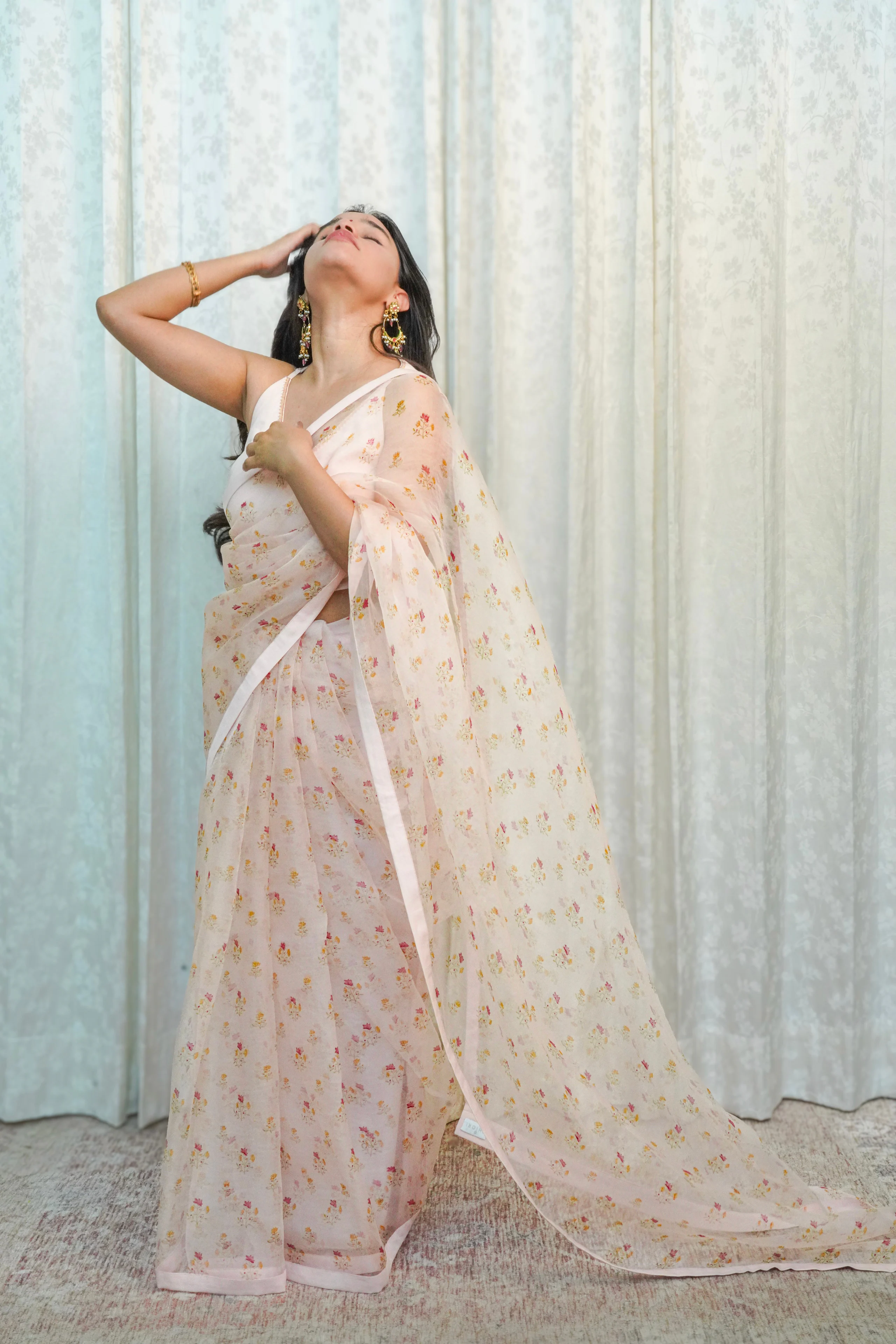
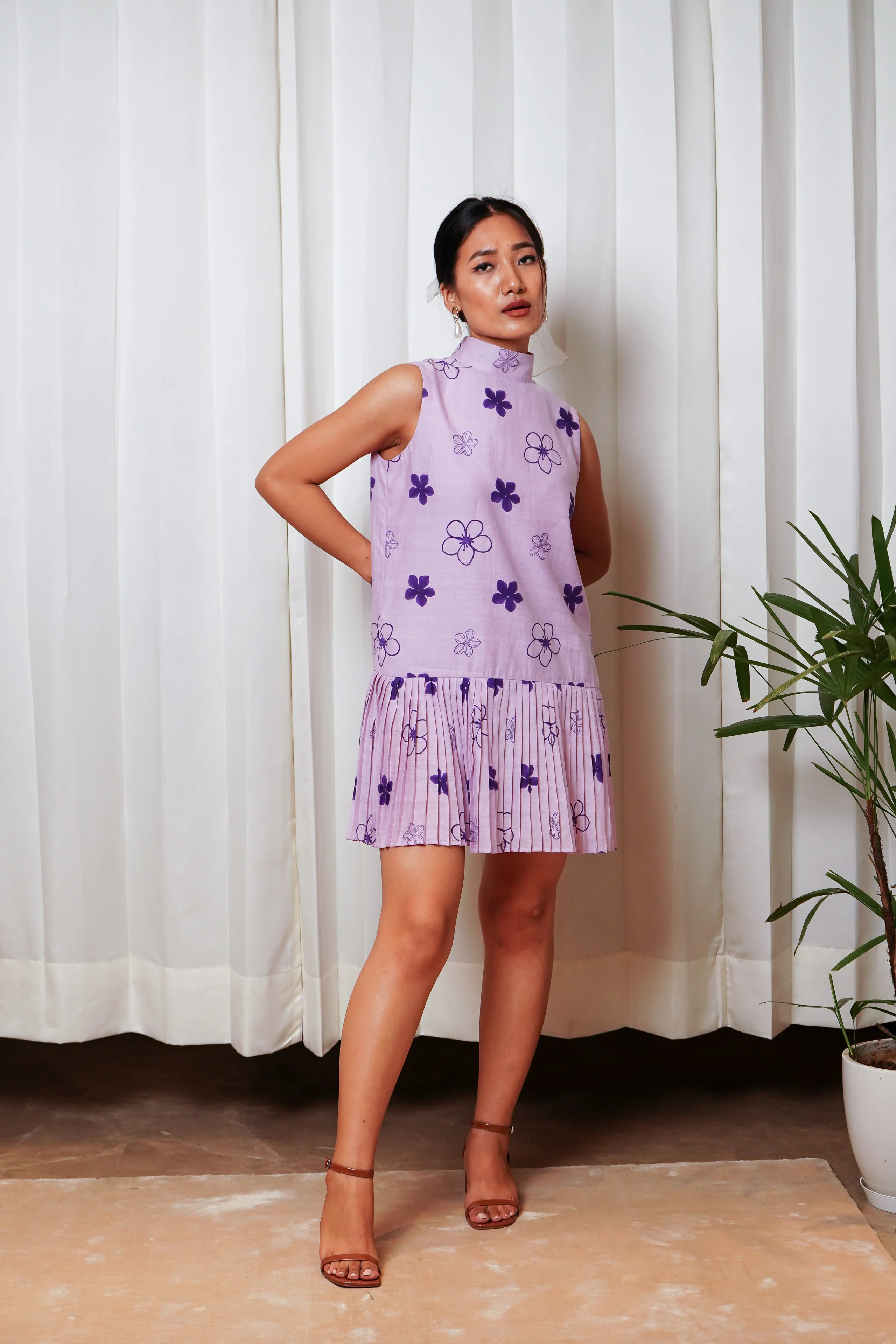
Wildflower studies / Summer textiles
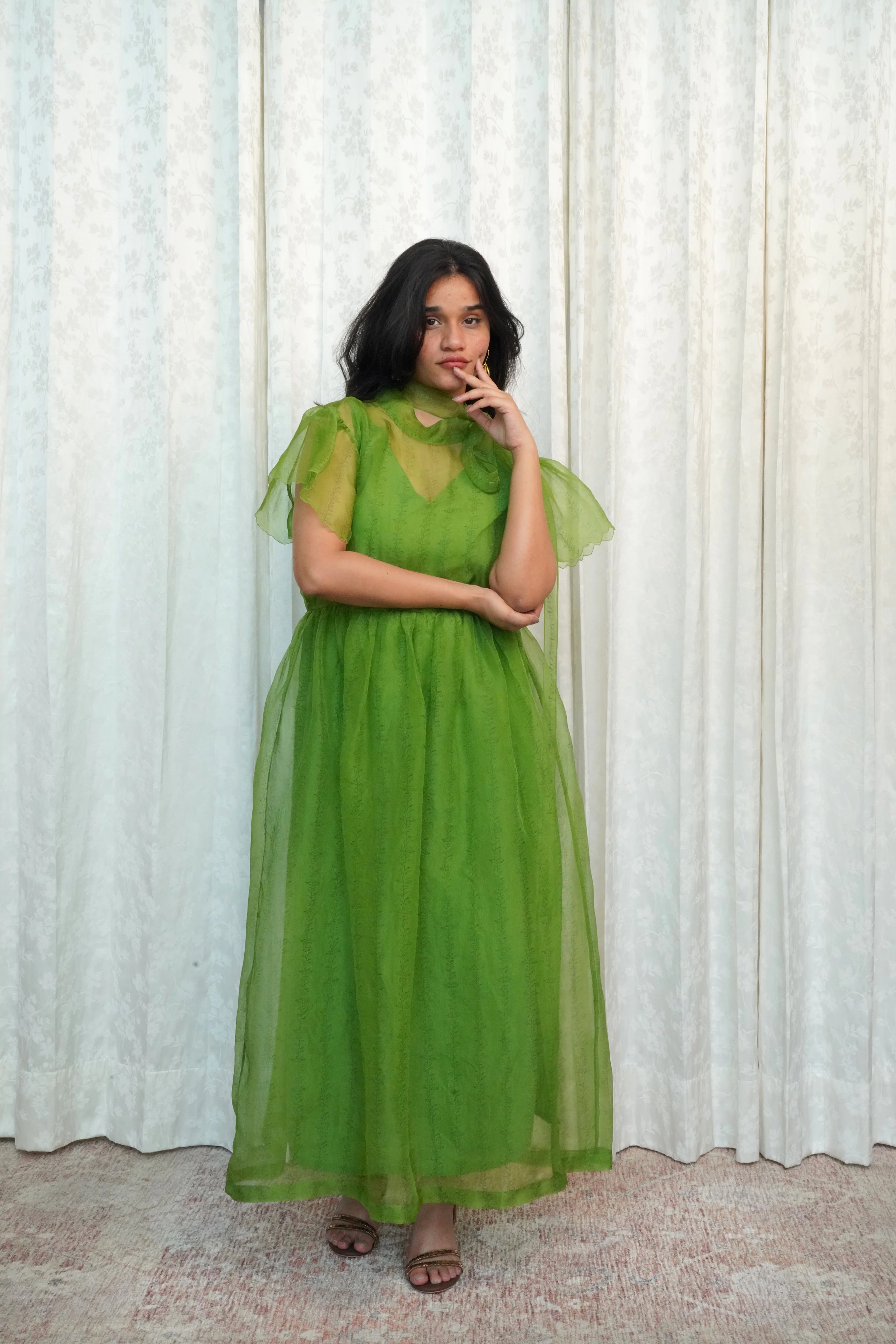
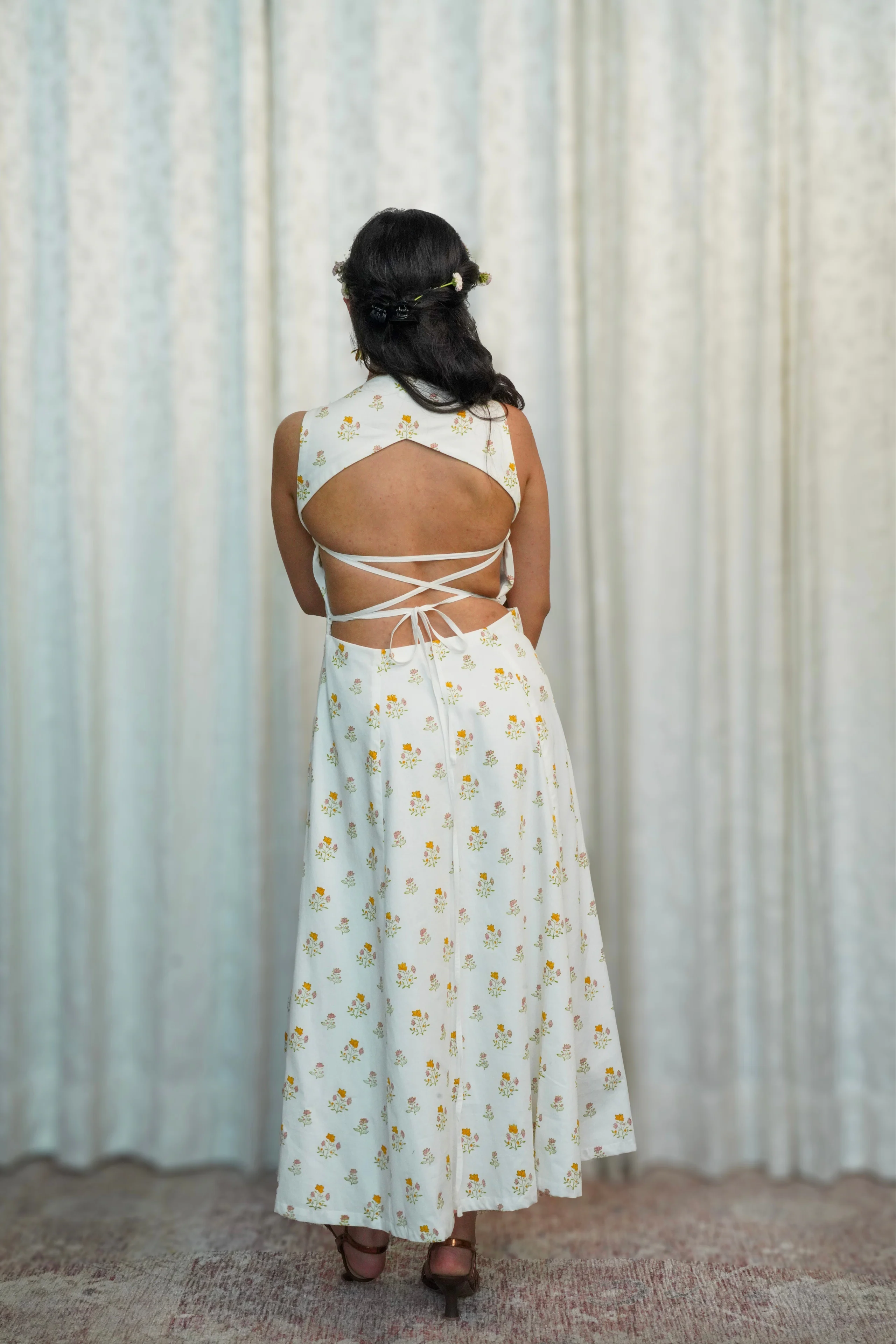
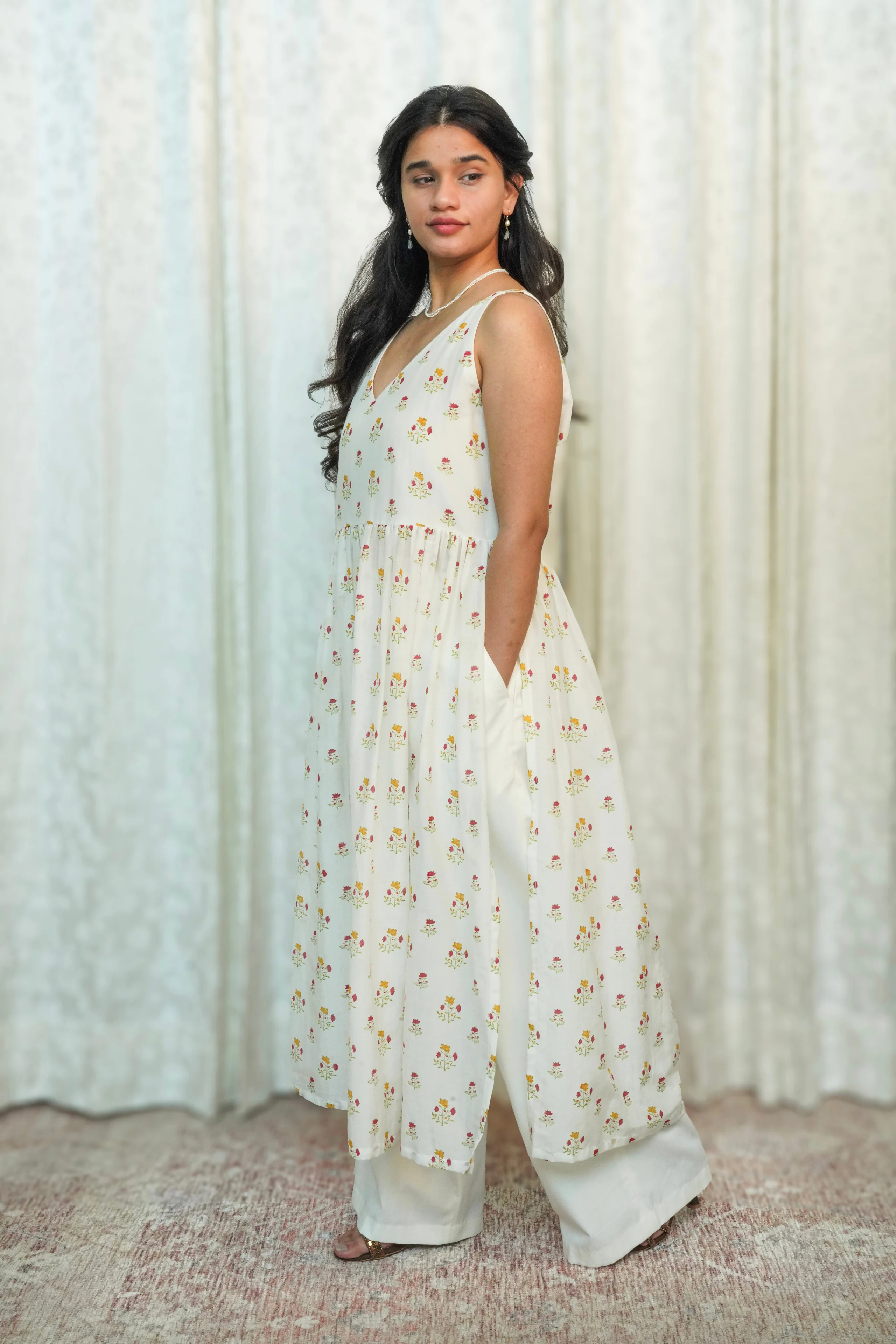
The collection began with botanical observation in the Nilgiris, translating wildflower sprigs, vines and shola blossoms into a controlled family of hand-block motifs. Scale, spacing and colour separation were repeatedly tested across ivory, sage, rosewood and soft pink grounds so the print system could move coherently between fluid dresses, tunics, separates and sarees.
Material trials paired cotton satin and cotton twill with linen blends, cotton-silk and transparent silk organza. Panel lines, soft gathering, cut-outs and tie structures were refined to balance ease with definition; embroidered organza flower patches introduced a dimensional counterpoint to the printed surfaces.
 02 / 07
Collection study · 02
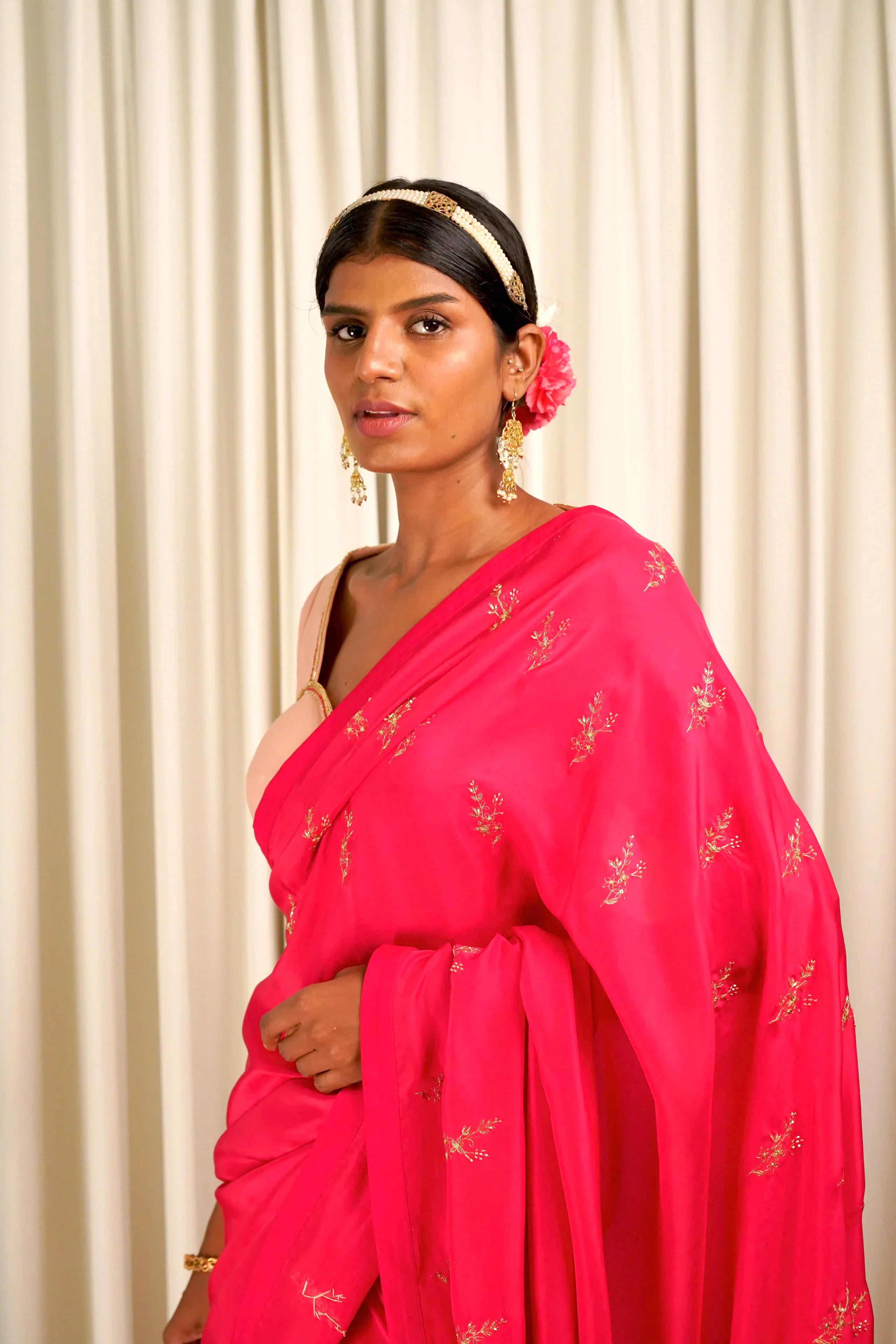
Occasionwear / Embroidered surface
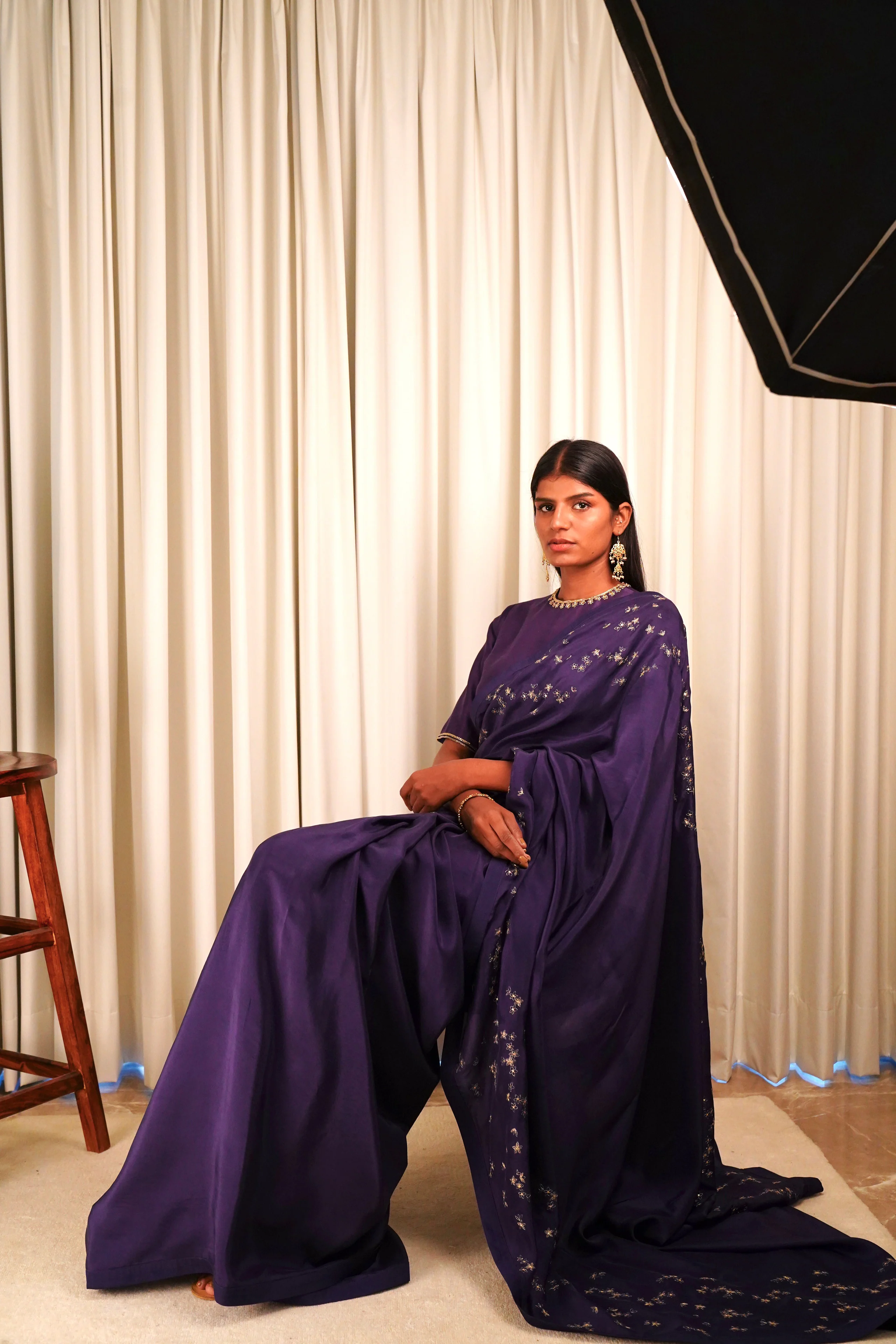
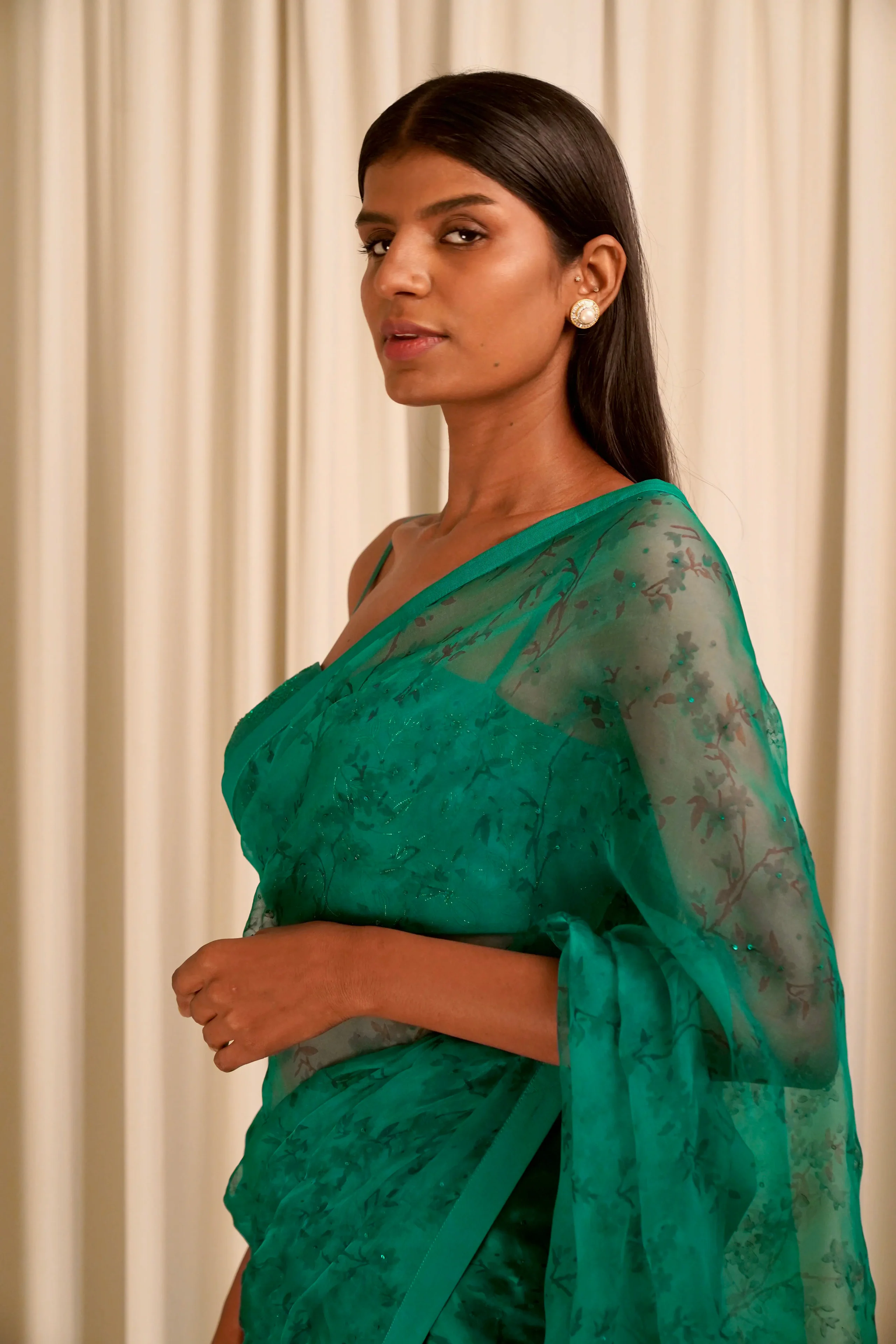
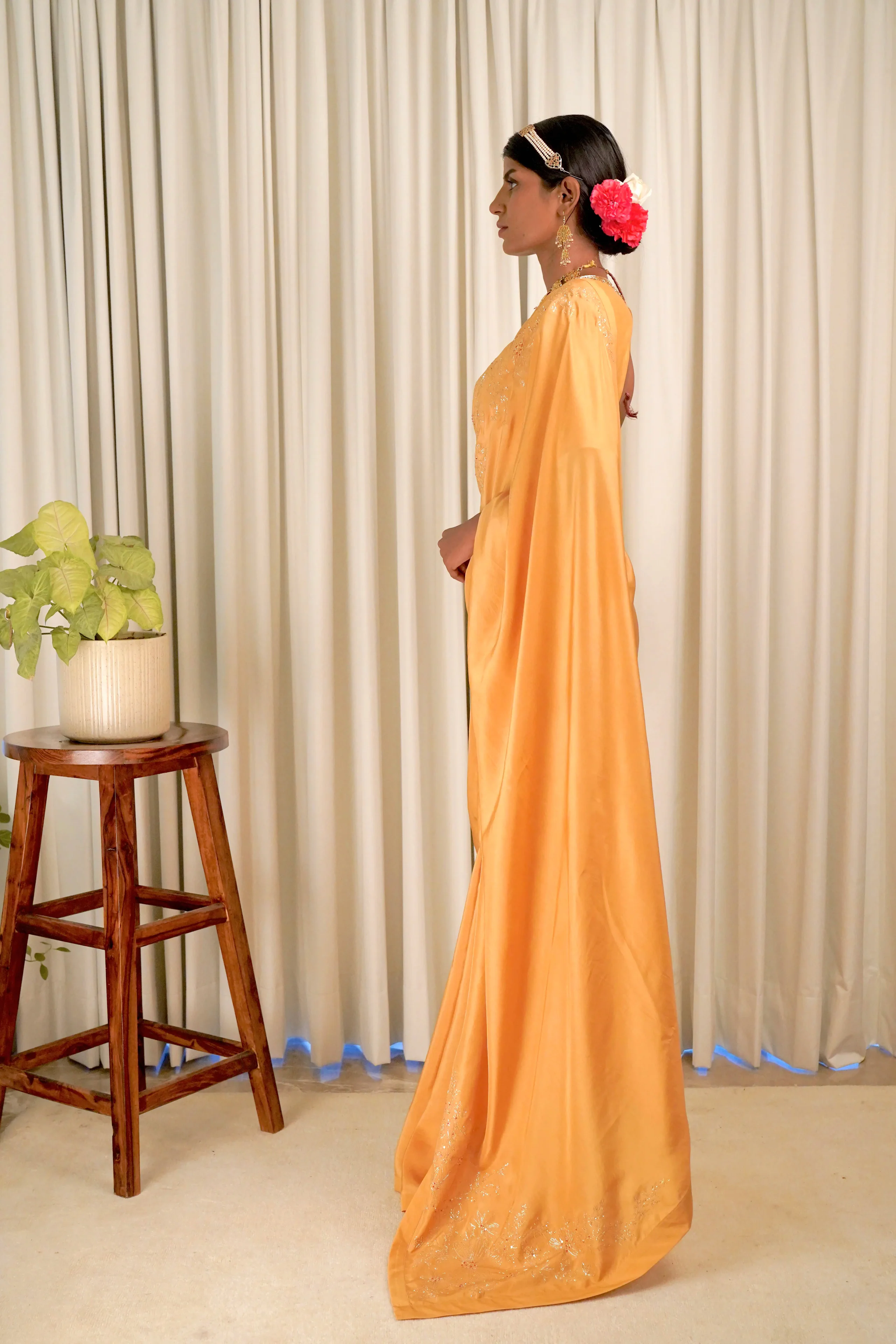
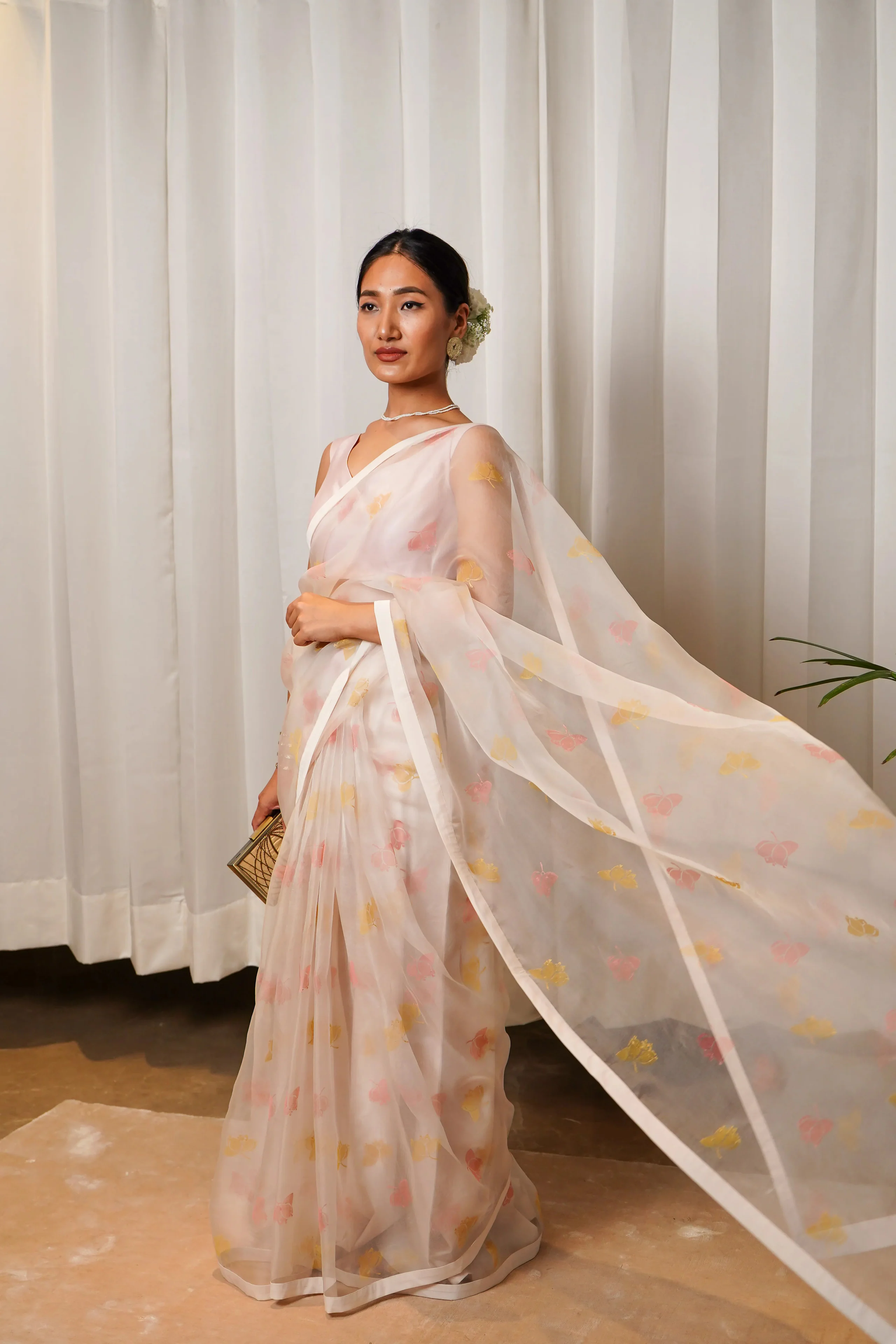
Timeless investigated how Indian occasionwear could carry ornament without losing clarity of line. Tonal floral prints were developed for silk organza sarees, then selectively interrupted with sequin, zari and Zardosi embroidery. Placement concentrated visual weight at the palla, neckline and sleeve, allowing negative space to remain an active part of the composition.
Silk and silk organza provided movement and translucency, while Chanderi supported the more structured blouse and tunic components. Each look required calibration between motif density, embroidery weight and fabric behaviour; pleating, tie-back construction and considered neckline proportions were sampled to maintain wearability across the collection.
 03 / 07
Collection study · 03
Bougainvillea / Transformative silhouettes
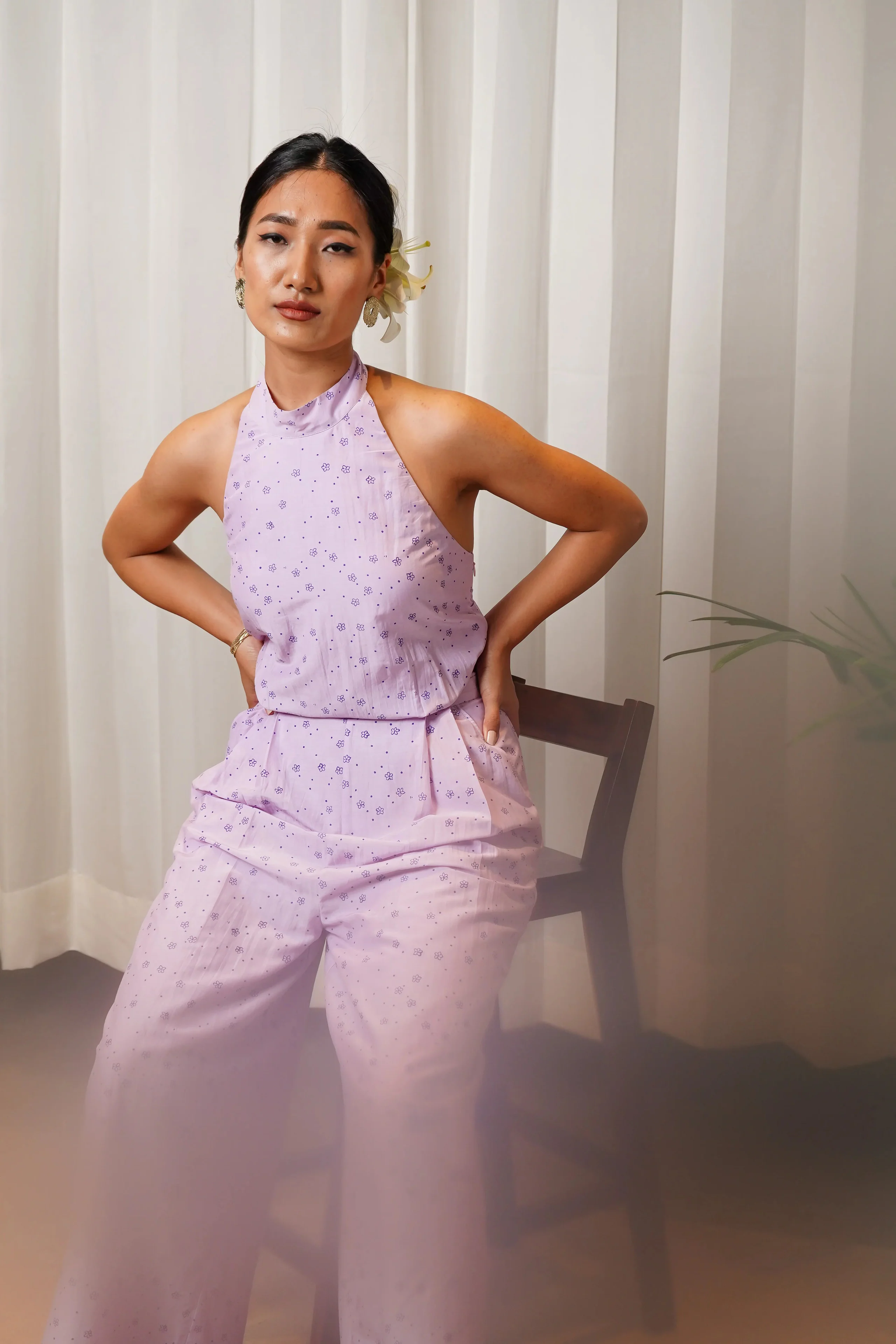
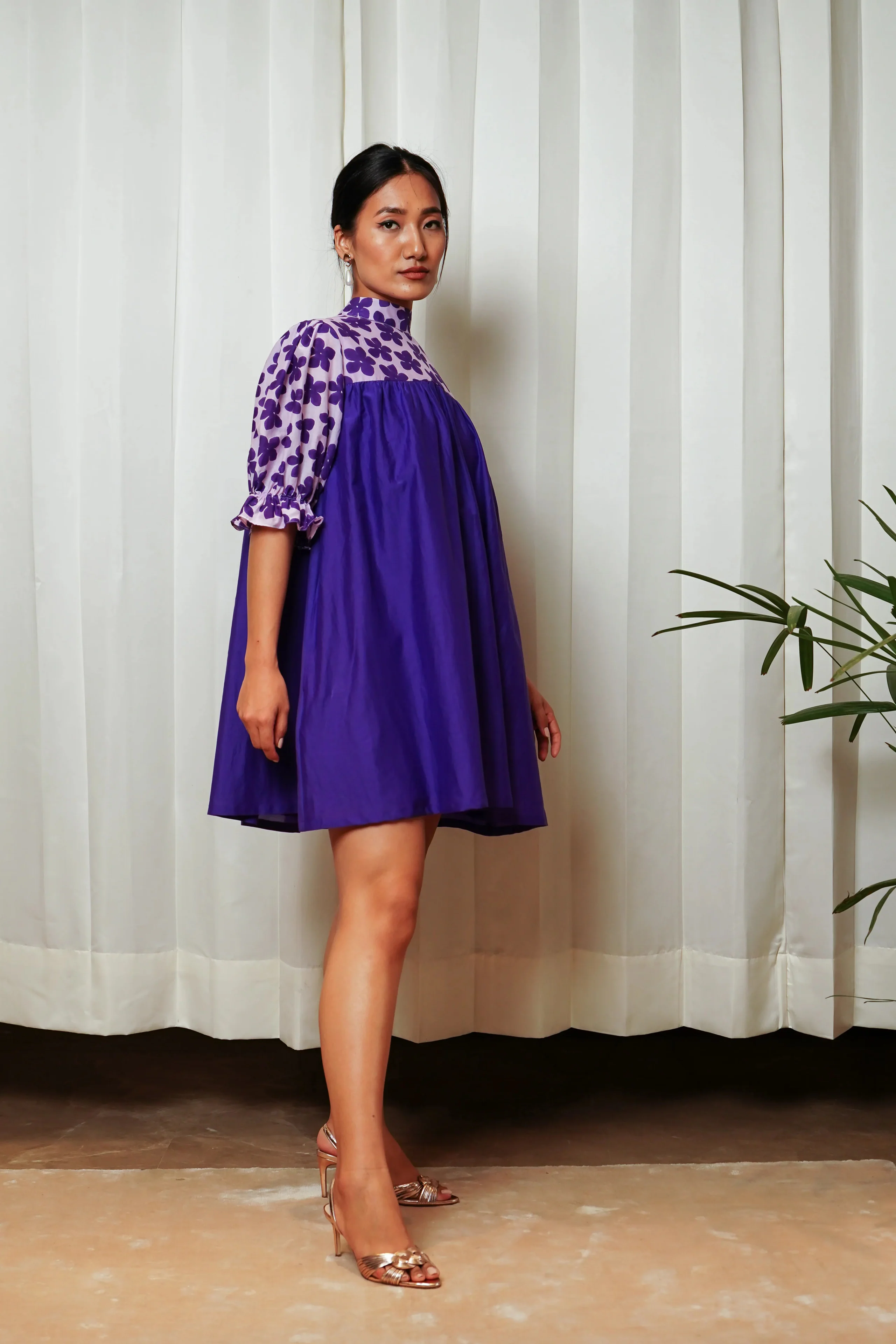
This chapter explored garments that reveal themselves gradually. Bougainvillea and dense floral studies were abstracted into lilac, purple and blush prints, then applied across organza sarees, cropped wraps, caped dresses and fluid jumpsuits. Repetition and directional changes in the artwork create visual shifts as the body moves.
Silhouette development moved between drape-led forms and engineered volume: overlap closures, cape panels, back ties and statement sleeves were toile-tested for proportion and movement. The same print language was adapted across multiple scales, building continuity while allowing each garment type to hold a distinct rhythm.
 04 / 07
Collection study · 04
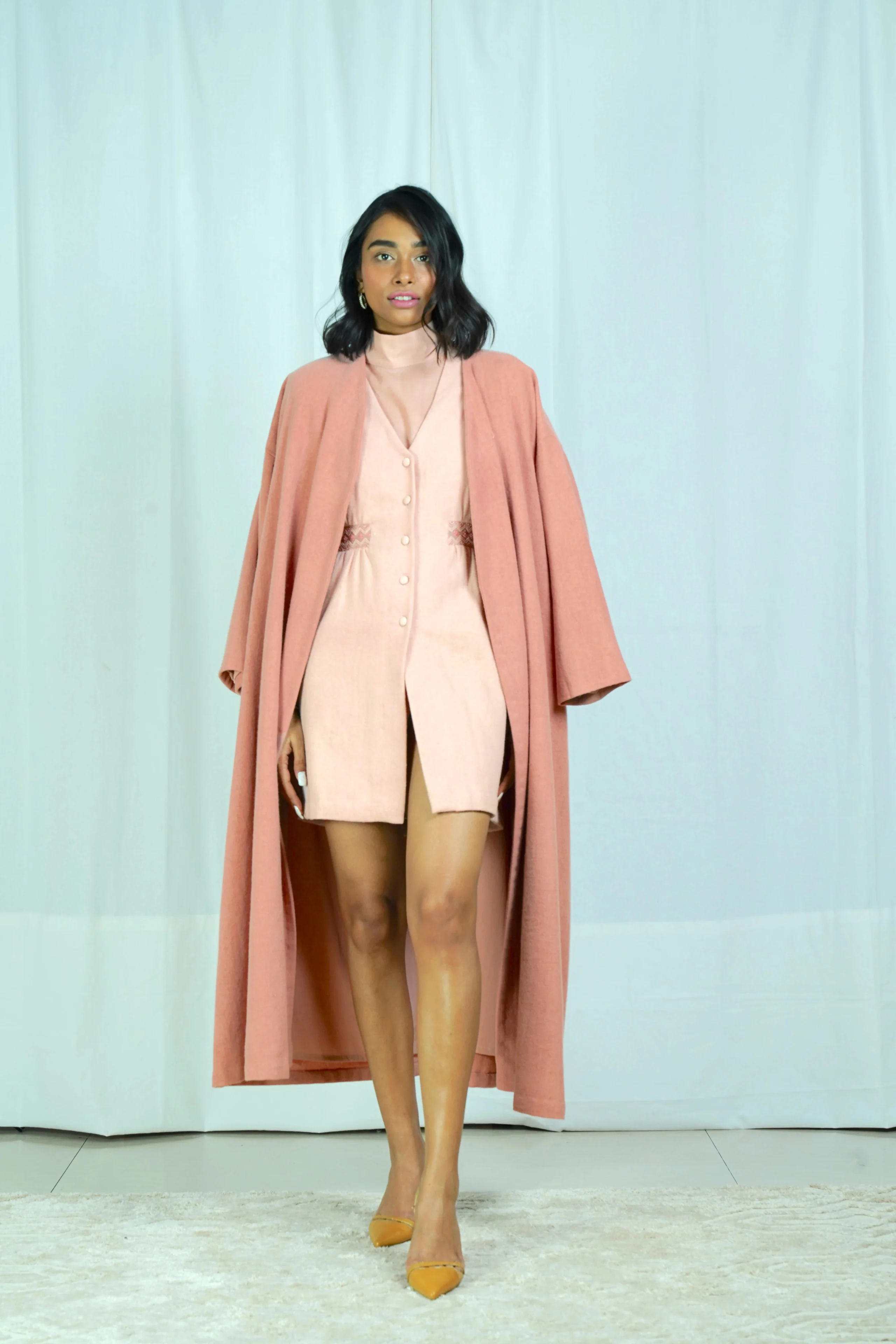
Filtered light / Winter layering
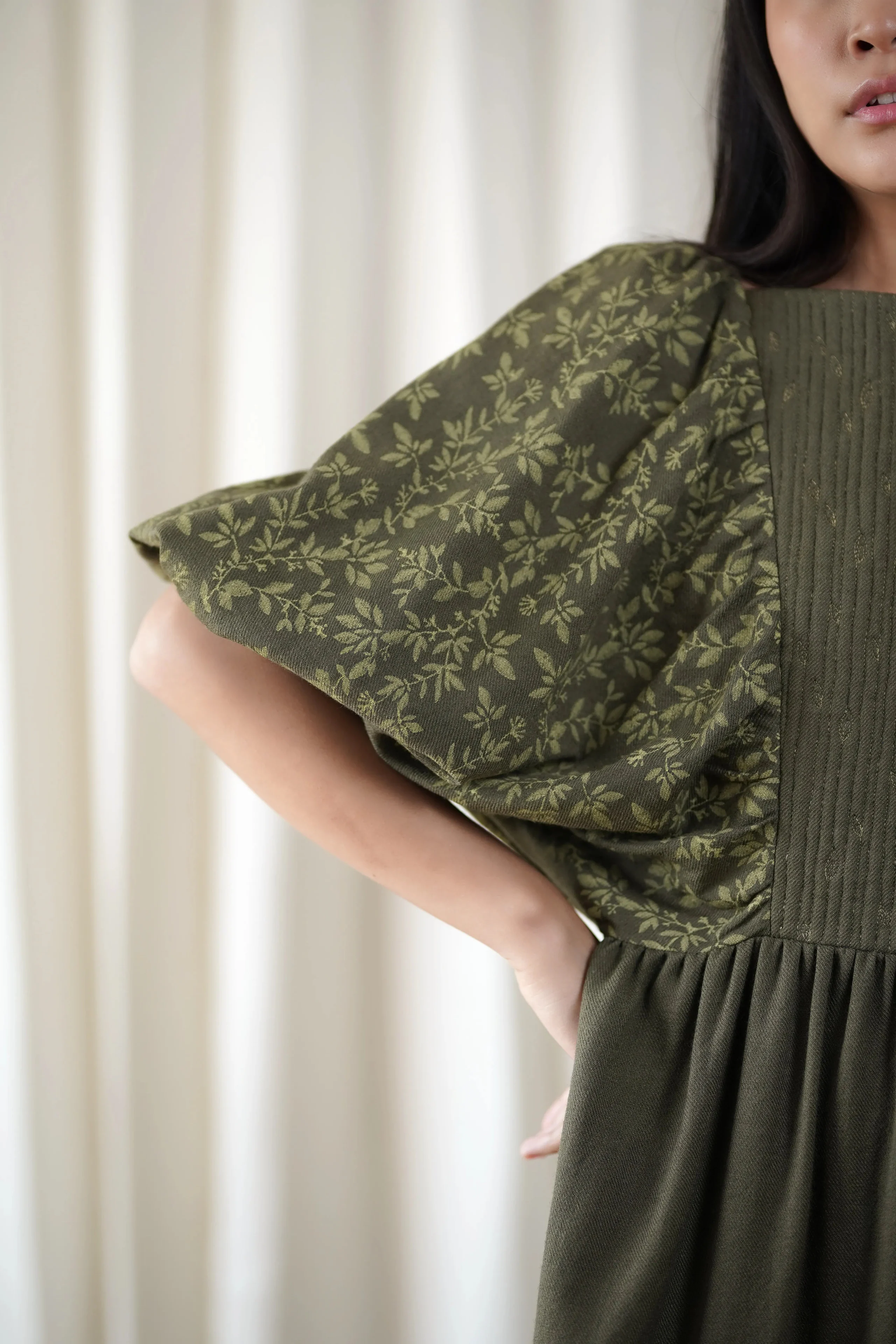
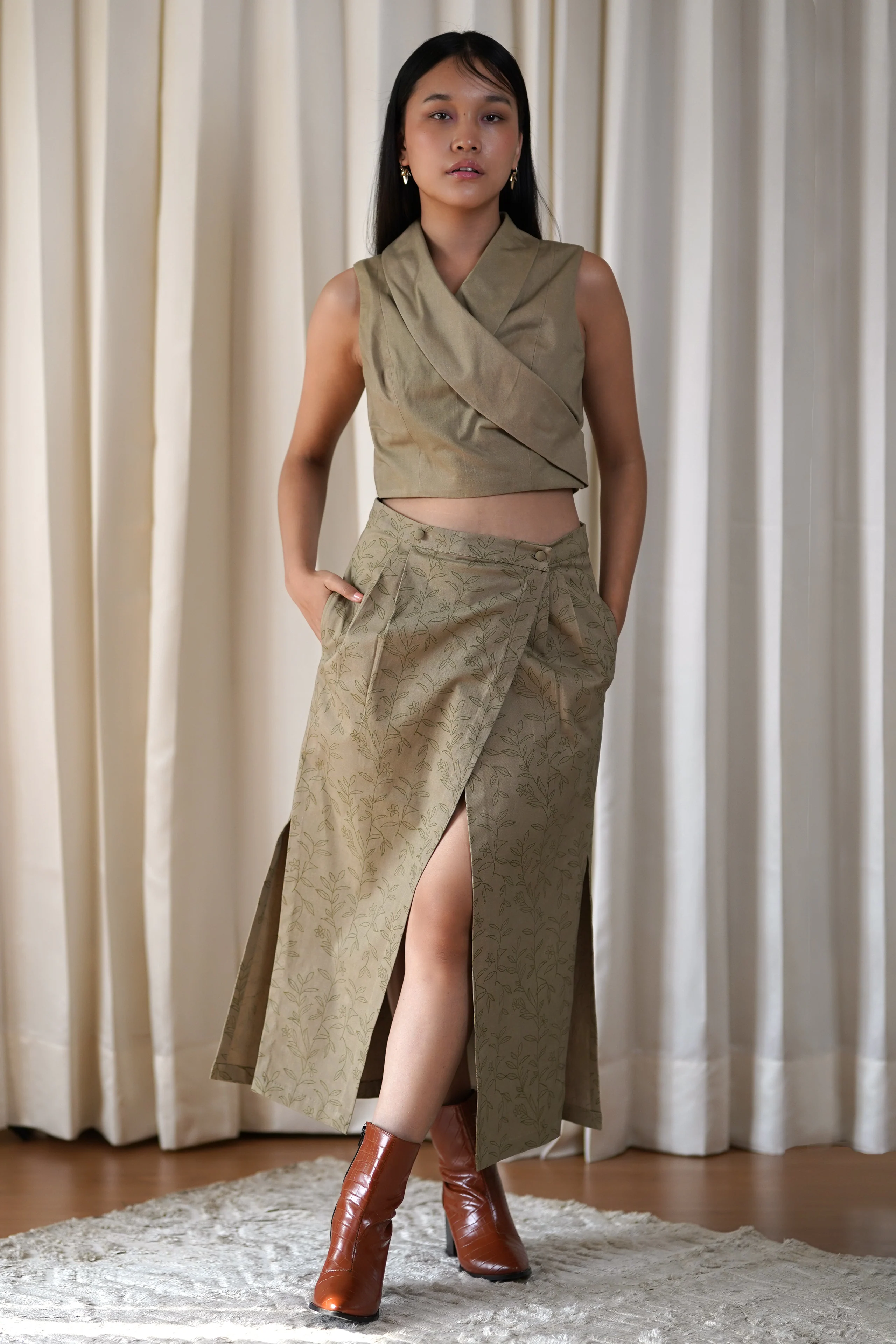
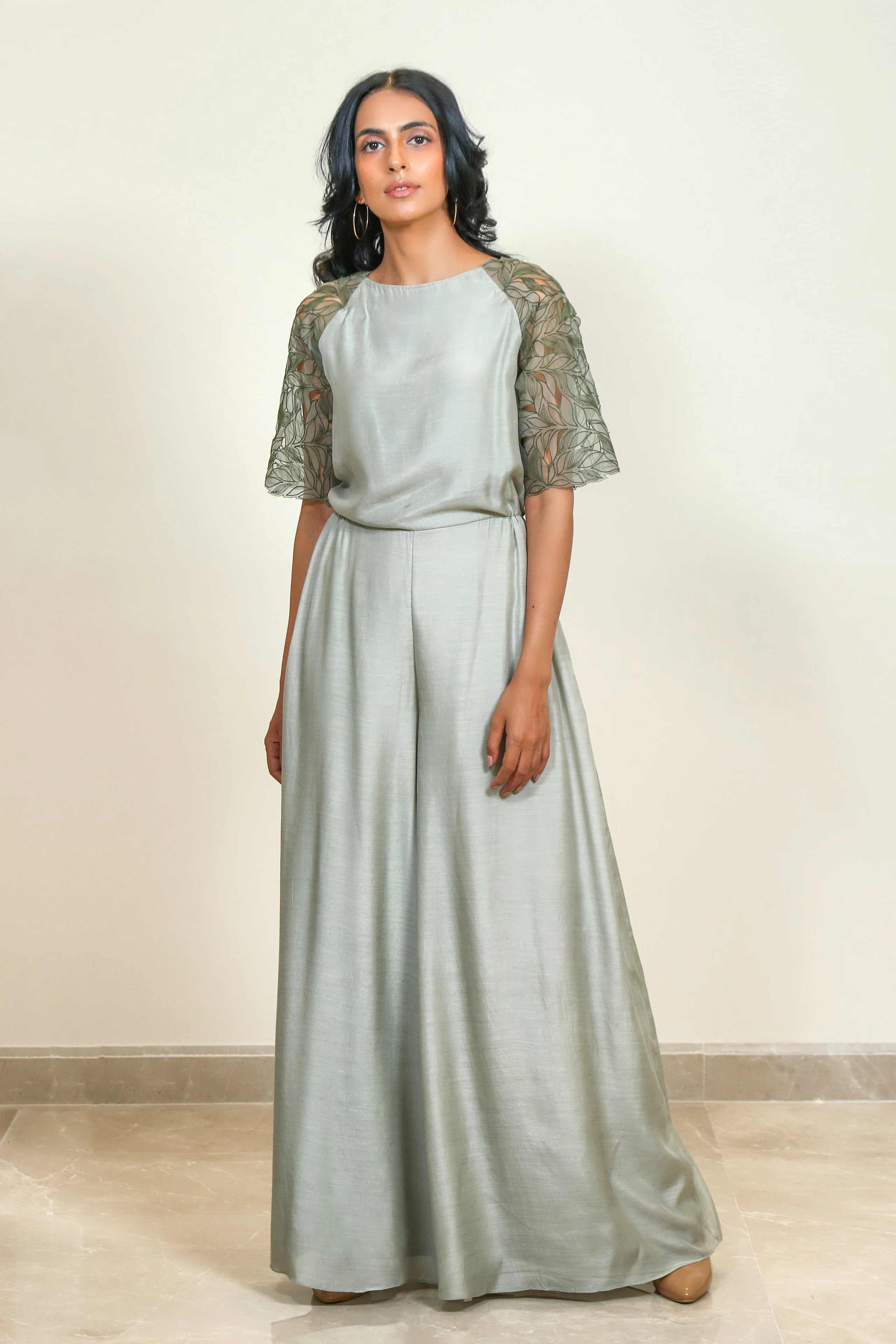
Named for light filtering through leaves, Komorebi translated soft shifts of shadow into an autumnal system of olive, ochre and blush. Print was used selectively—on sleeves, panels and wrap components—so pattern could emerge through layering rather than cover the entire garment.
Wool and lighter printed surfaces were sampled together to resolve differences in weight and fall. Kimono blocks, wrap constructions, drop shoulders, wide-leg trousers and quilted yokes established a modular winter wardrobe; pleats and adjustable ties allowed volume to be controlled without stiffening the silhouette.
 05 / 07
Collection study · 05
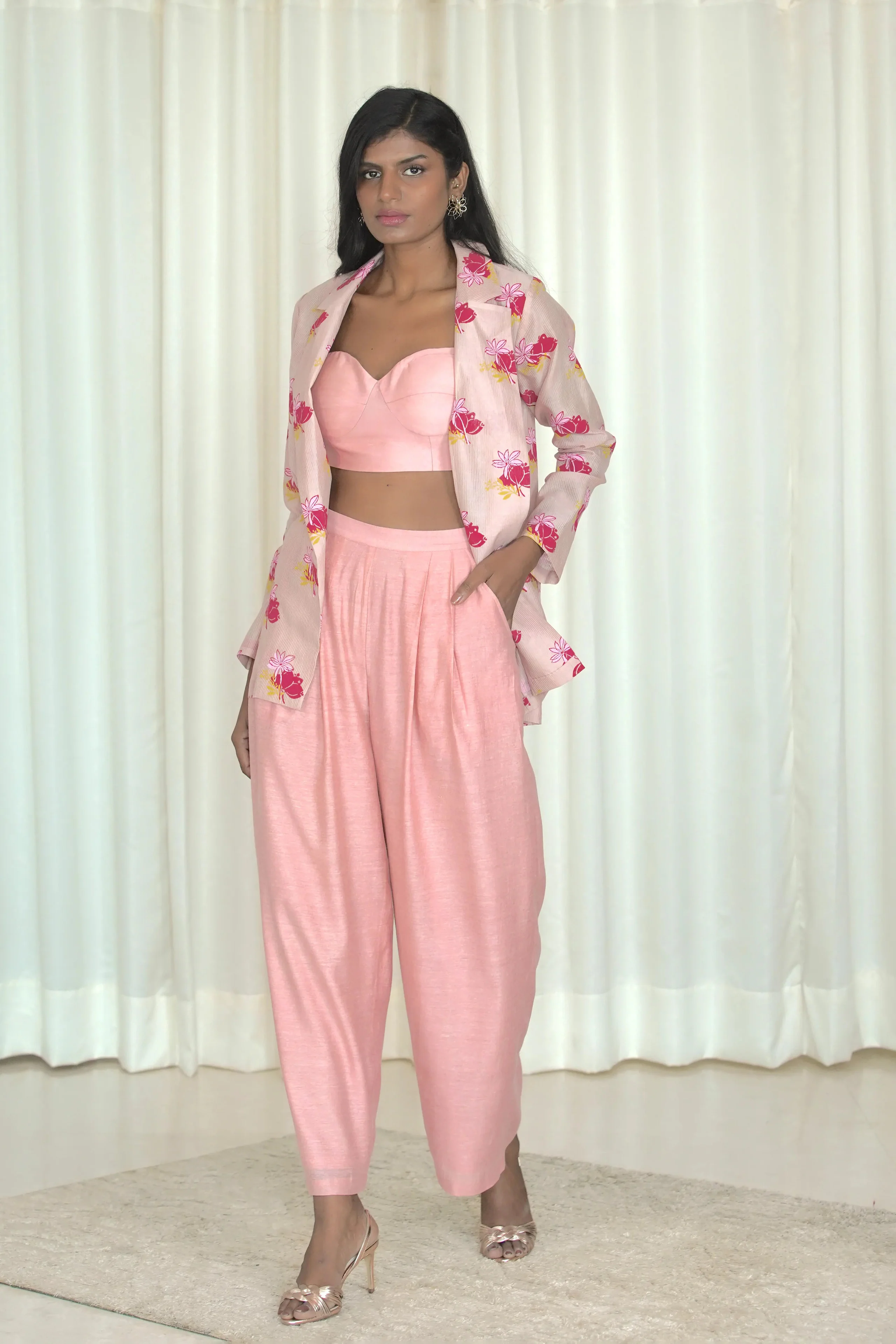
Costa Brava / Painted bloom
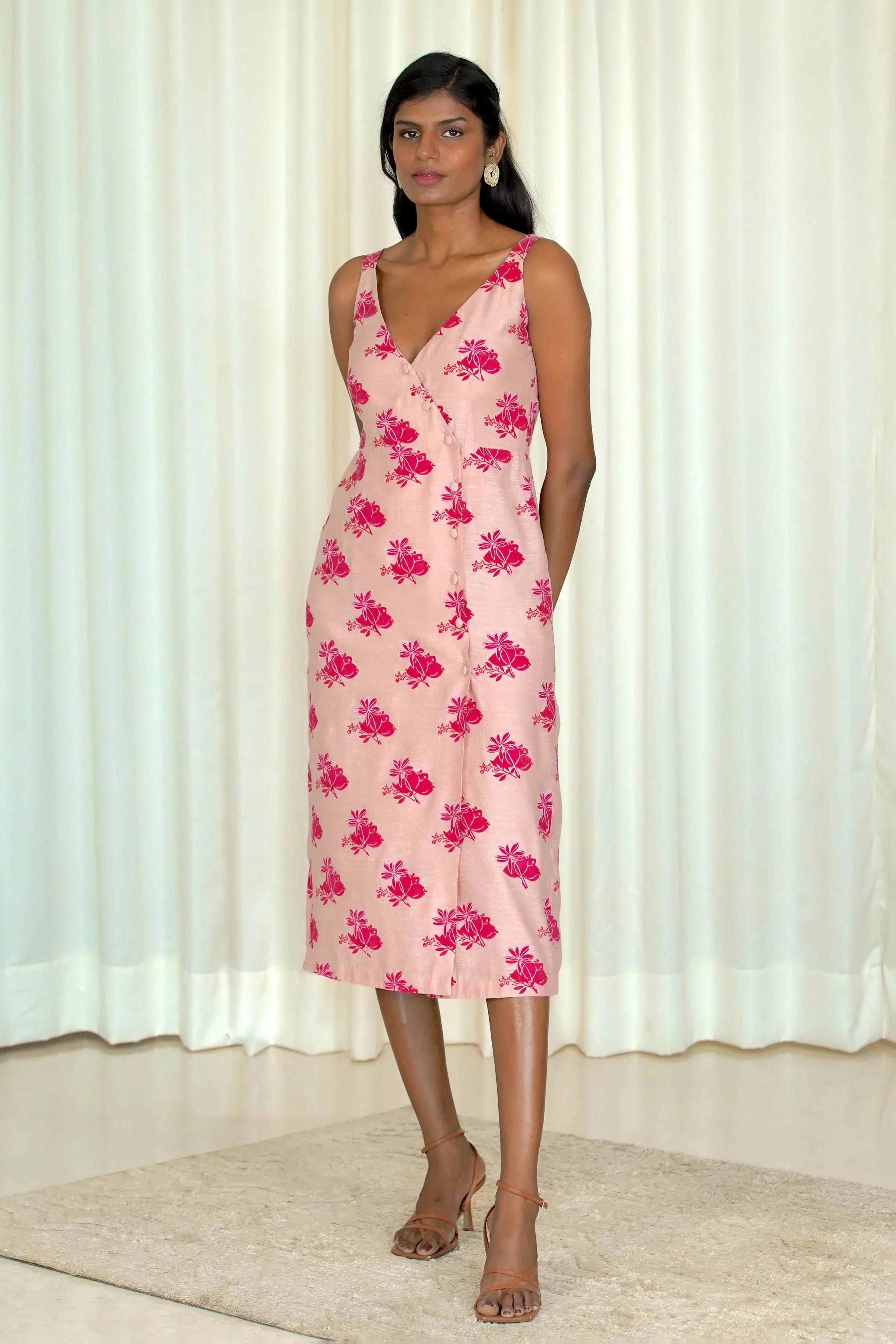
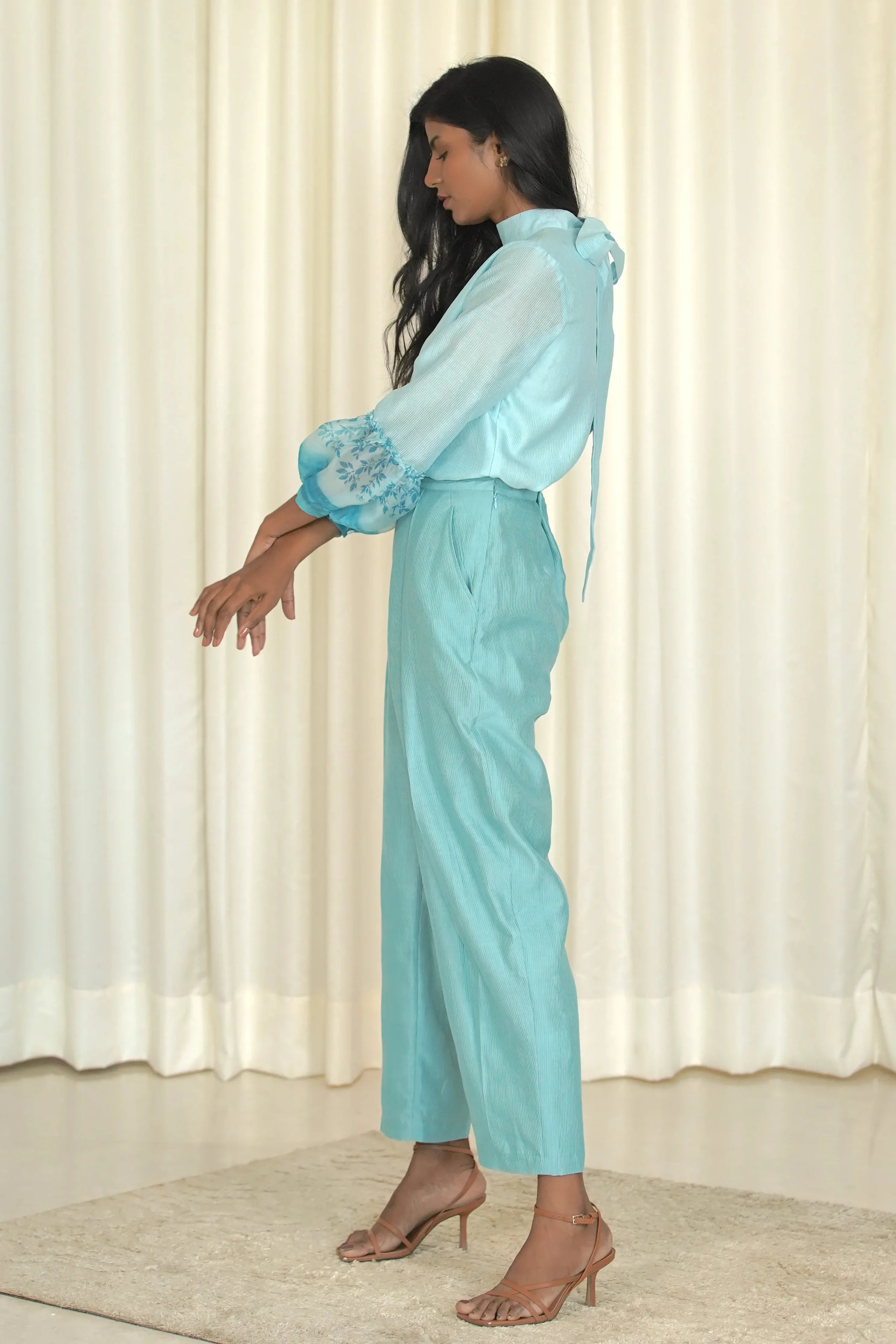
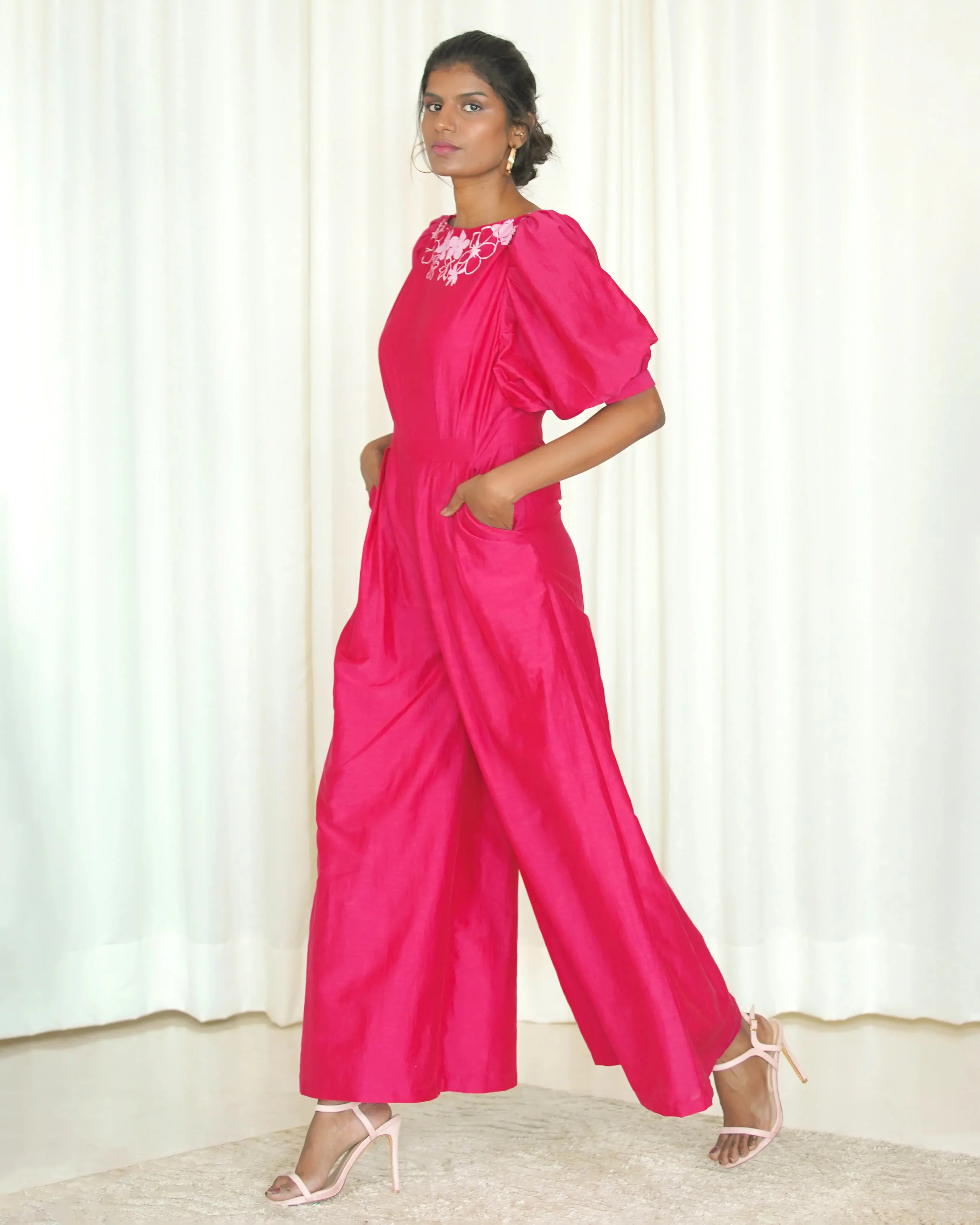
Research began with Begur’s blue coastline, flower-strewn water, cobbled paths and bougainvillea-covered stone walls. Those observations became a palette of sea blue, fuchsia and blush, with stripe, floral and painterly marks developed as a coordinated print story rather than isolated decoration.
Hand-block and hand-painted elements were positioned around sleeves, collars, necklines and wrap edges. Pleated shirts and trousers supplied tailored restraint, while organza overlays, flared dresses and jumpsuits tested transparency and movement. Fit iterations focused on overlap depth, tie placement and the transition between printed and solid panels.
 06 / 07
Collection study · 06
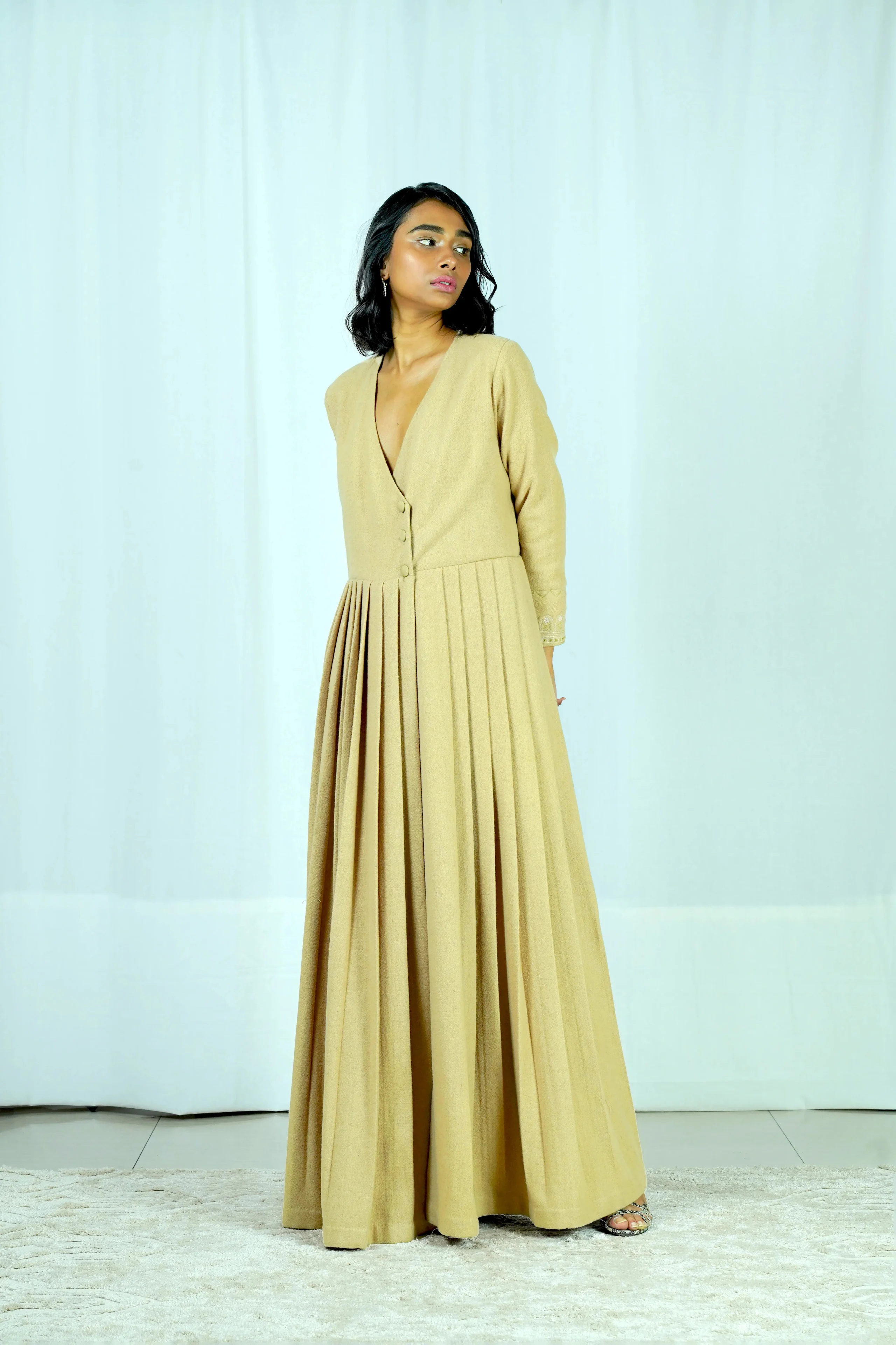
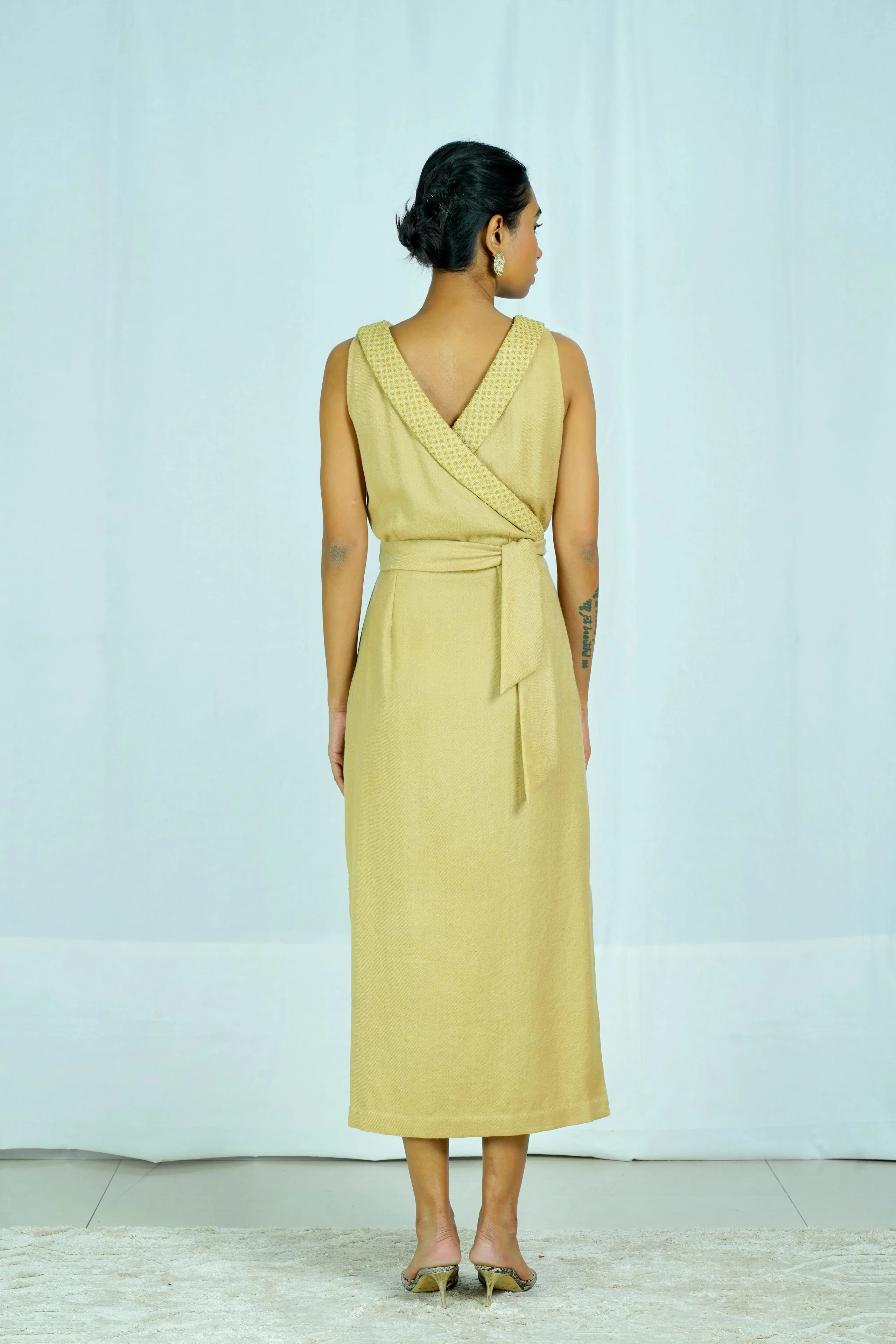
Chikankari / Sculpted winter cloth
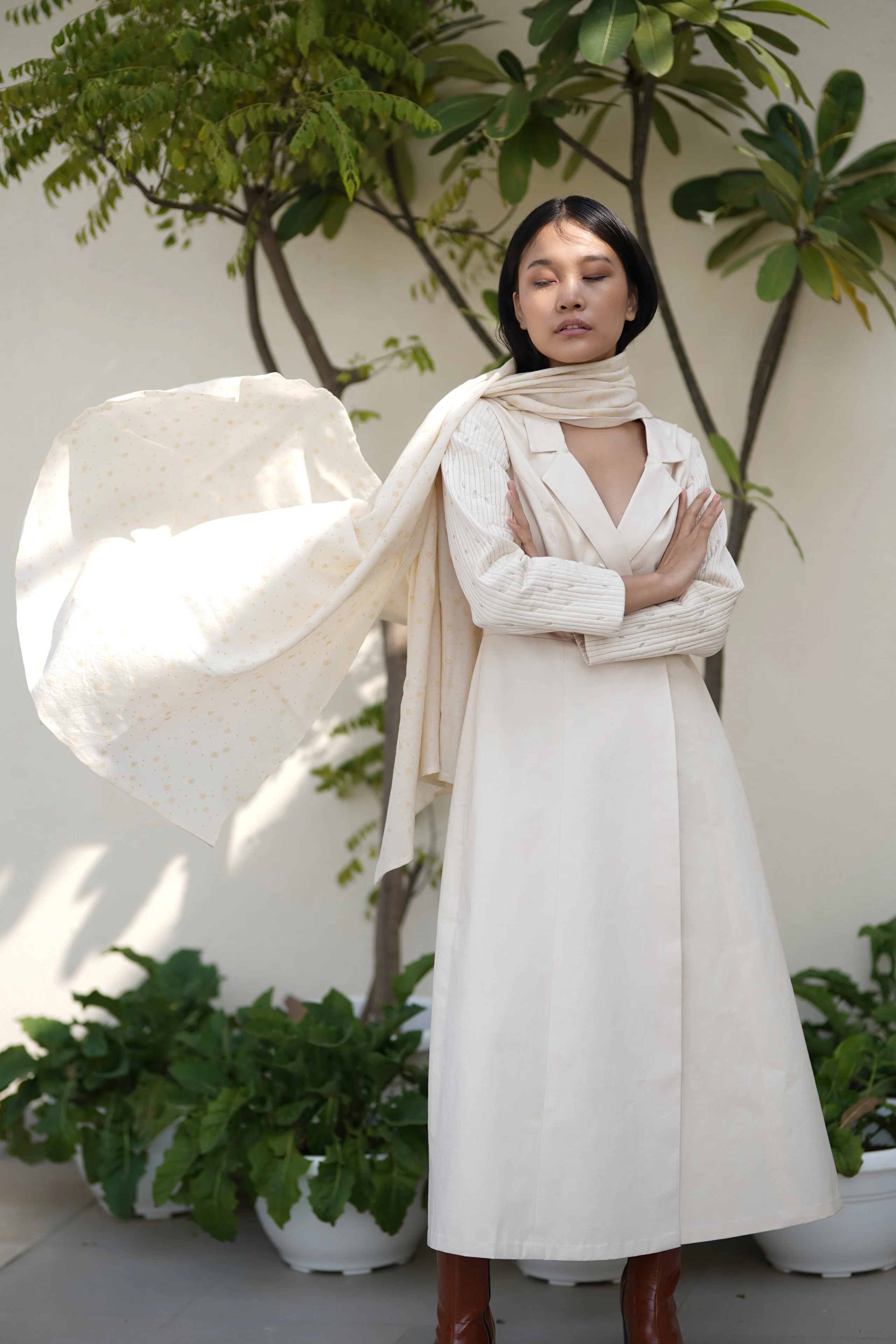
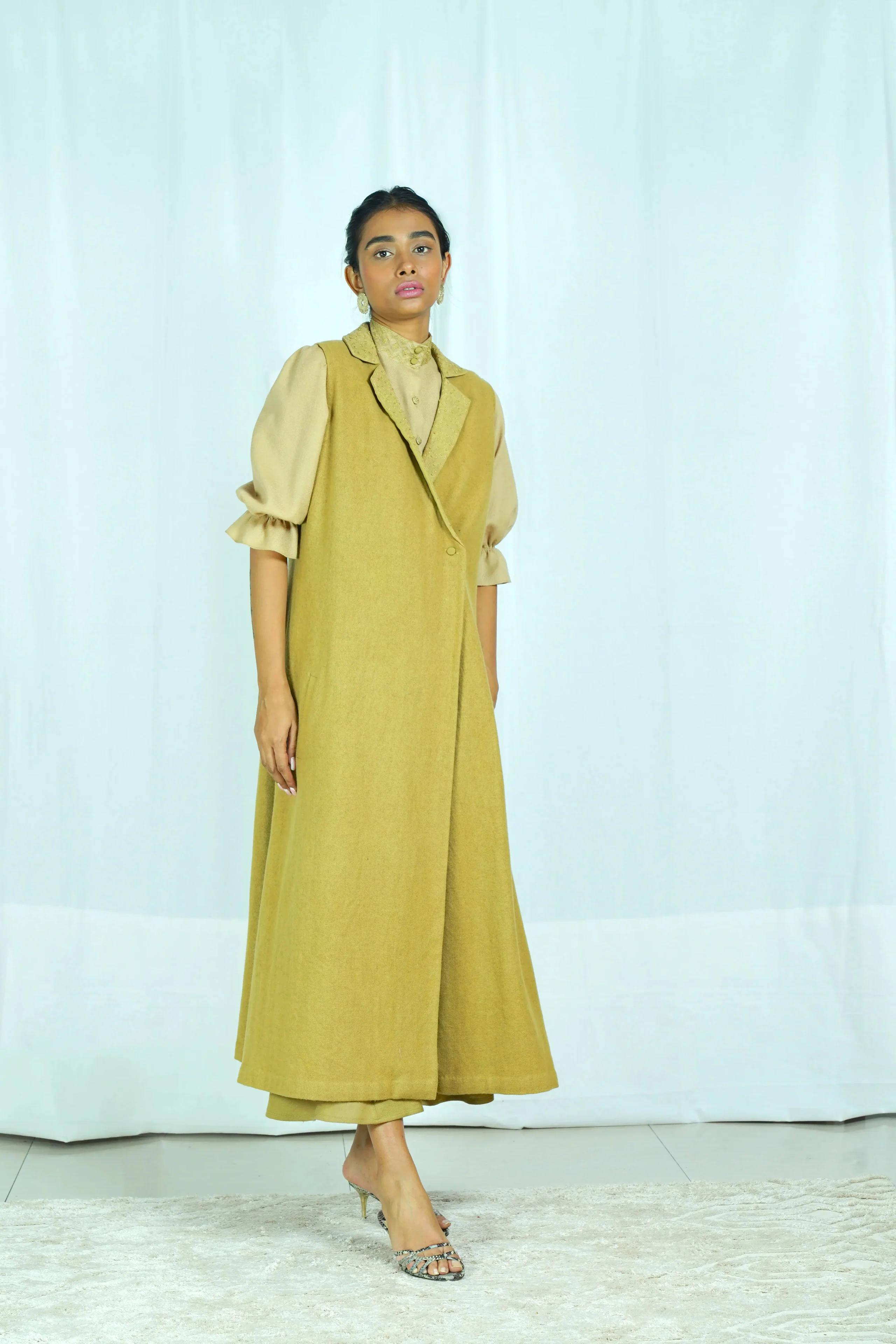
Nakkashi treated Chikankari as a structural design element within contemporary winter dressing. Tonal embroidery was mapped onto organza collars, sleeves and inserts, bringing delicacy to felted and woollen bases. The restrained palette directed attention toward line, relief and the hand of the maker.
Tailoring studies moved through notch and rolled collars, welt pockets, padded shoulders and double-breasted closures. Pleated coat-dresses, jacket-dresses and flared jumpsuits were refined through sampling, while quilted sleeves and embroidered buttons extended the surface language into functional construction details.
 07 / 07
Collection study · 07
Foliage systems / Tonal texture
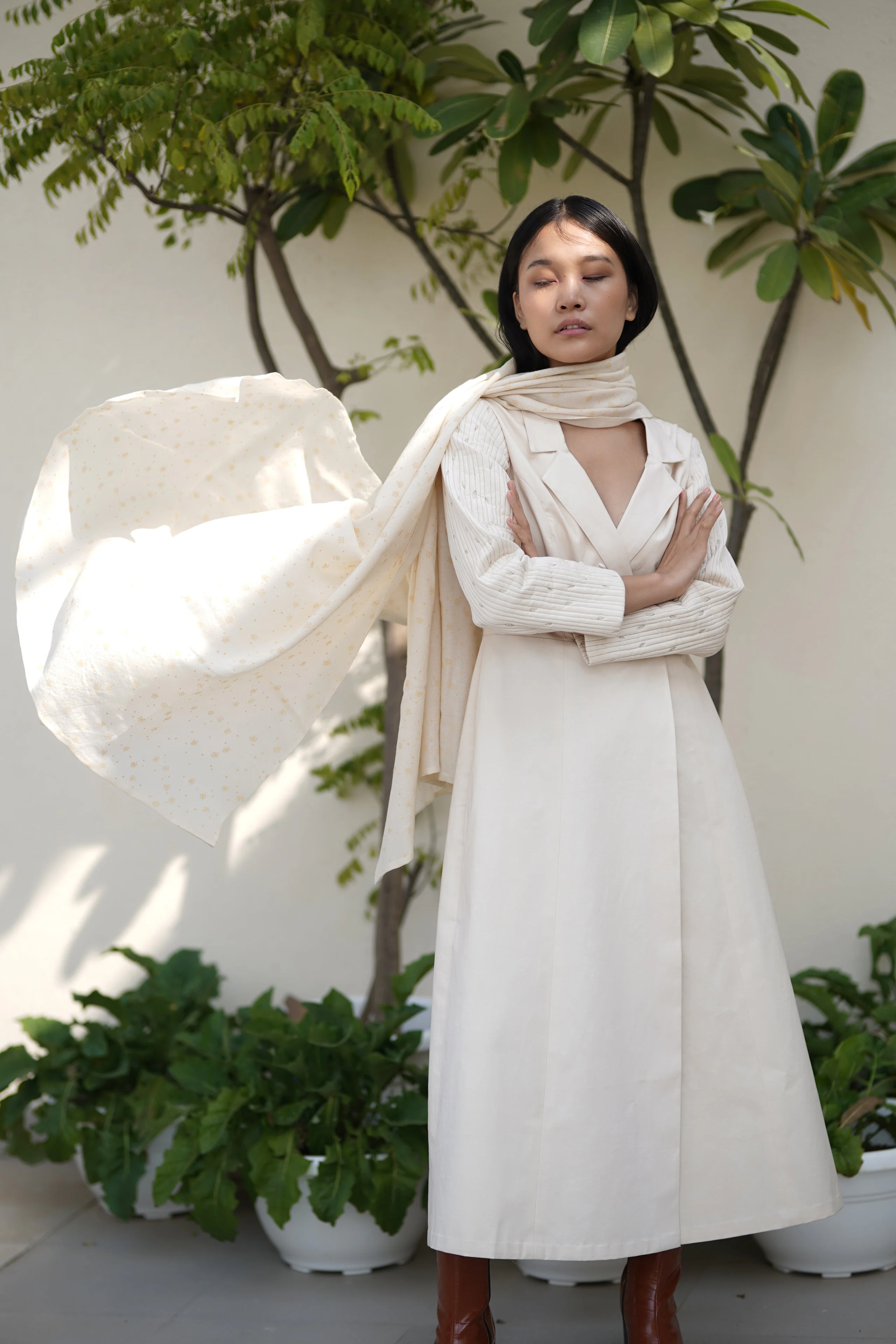
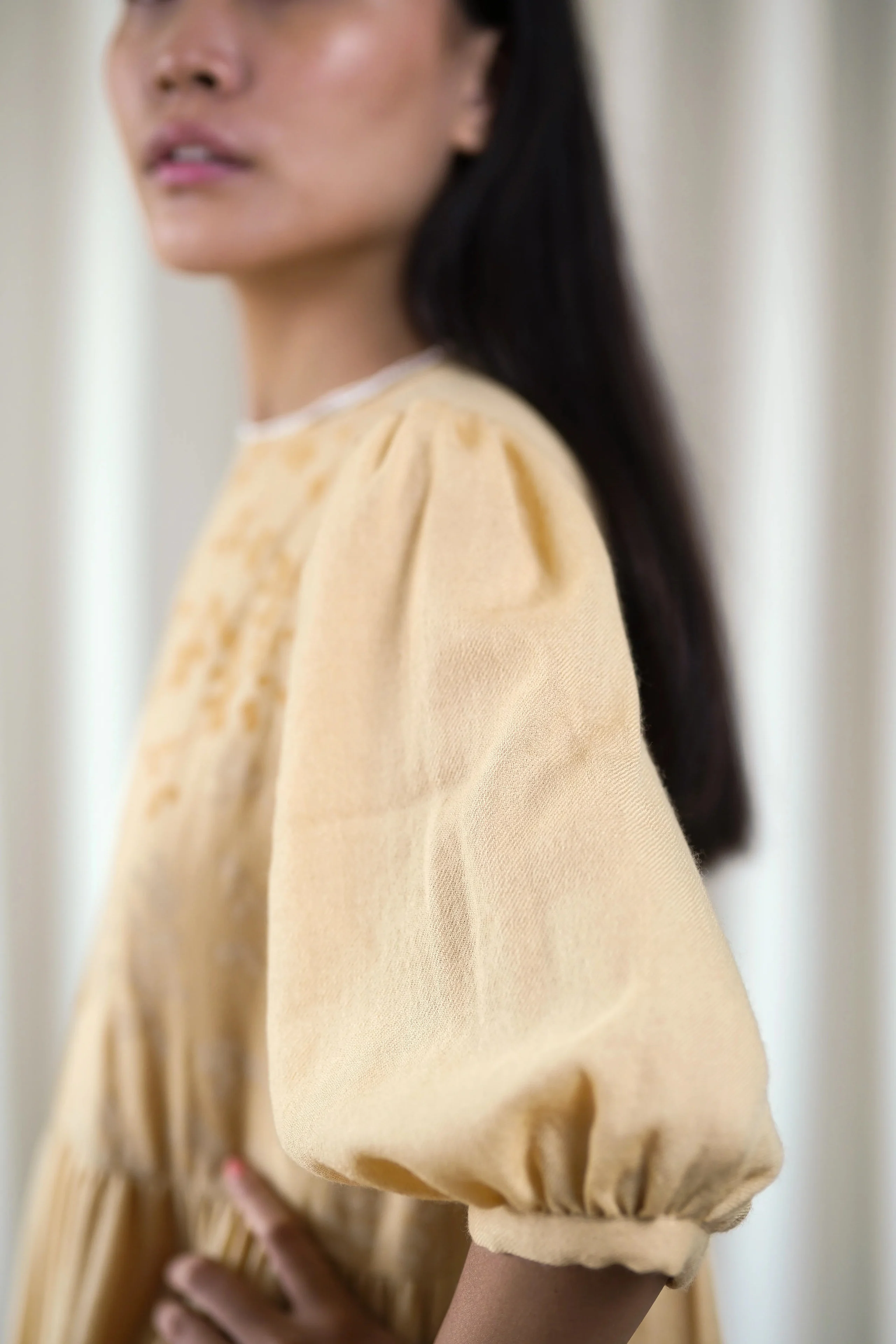
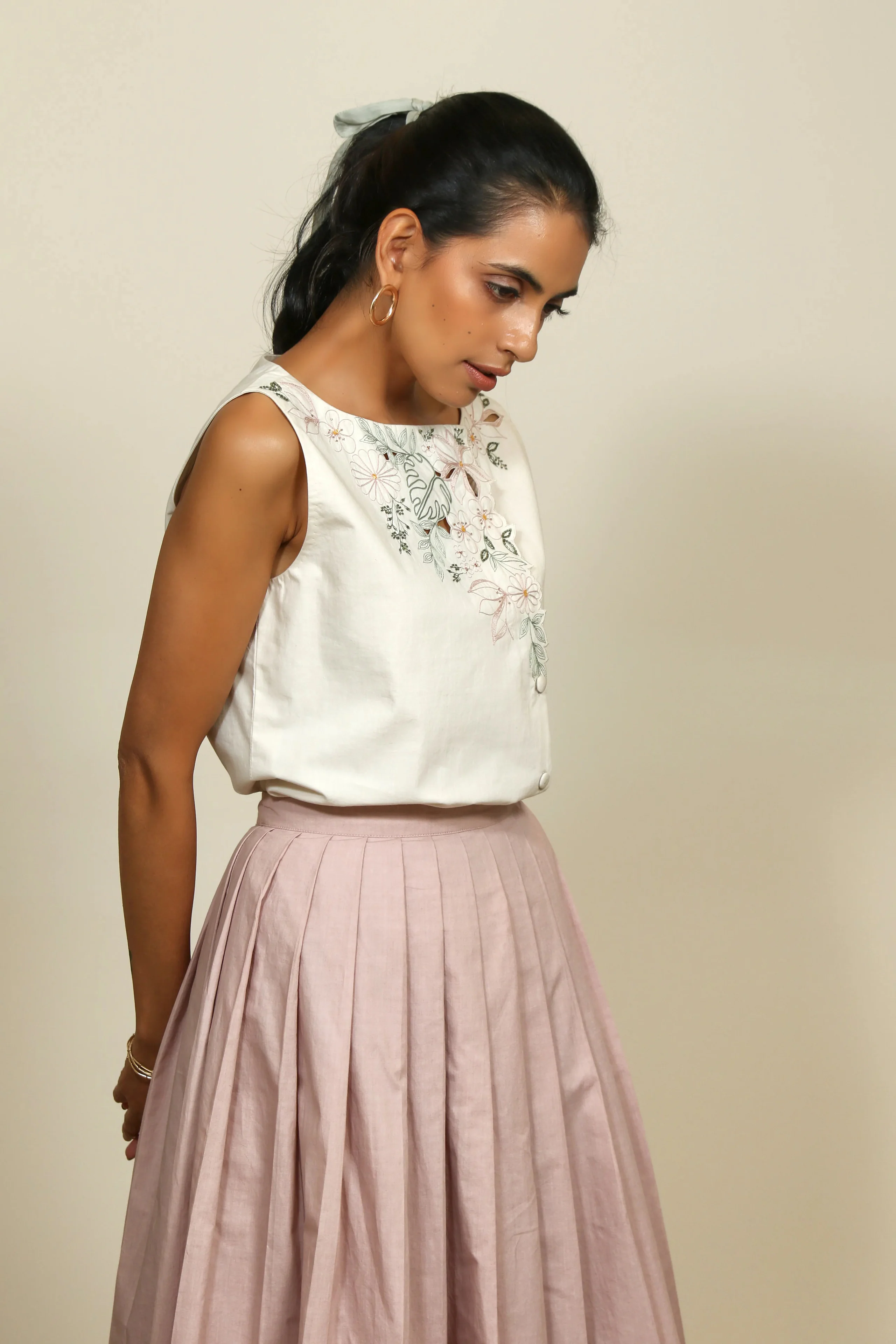
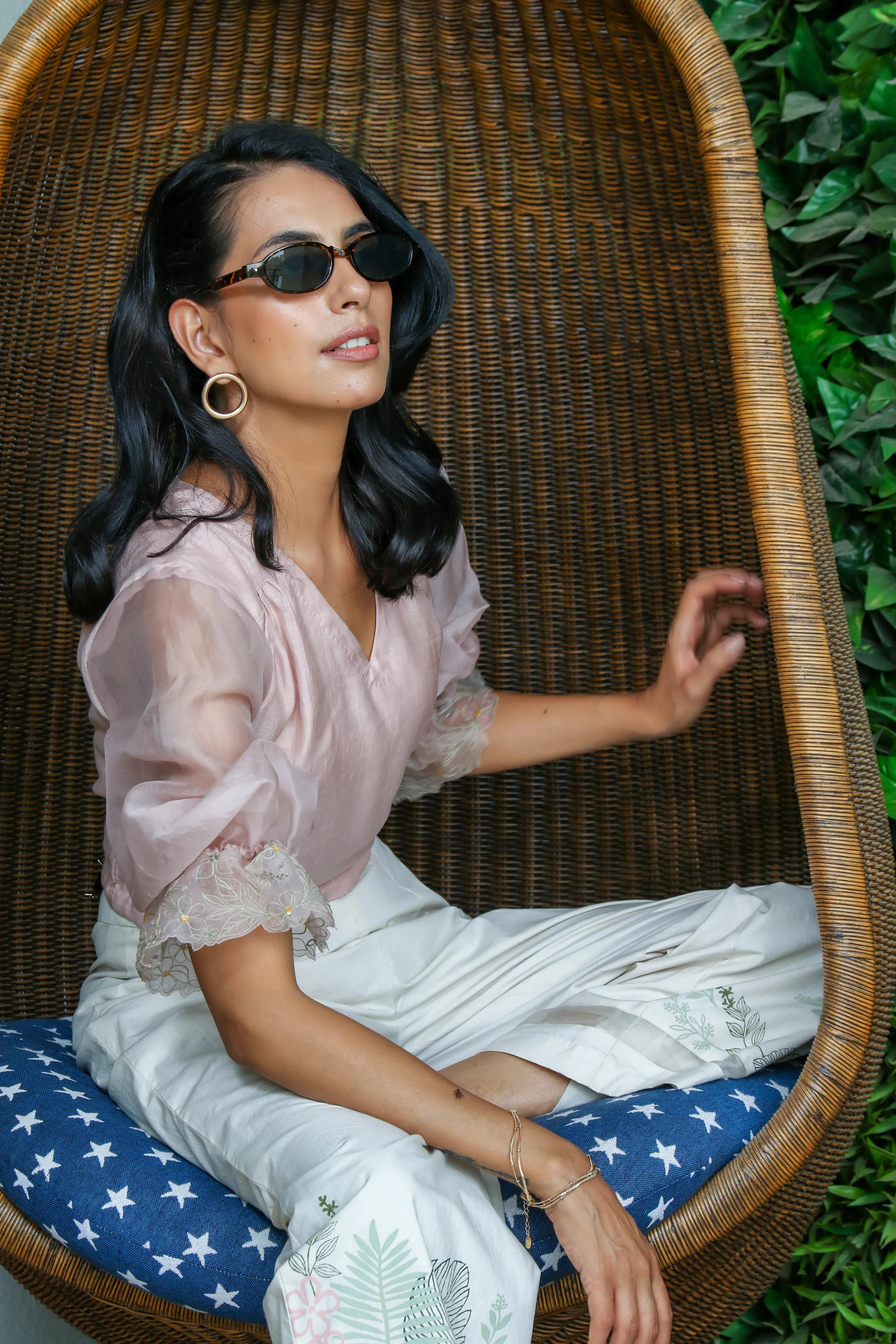
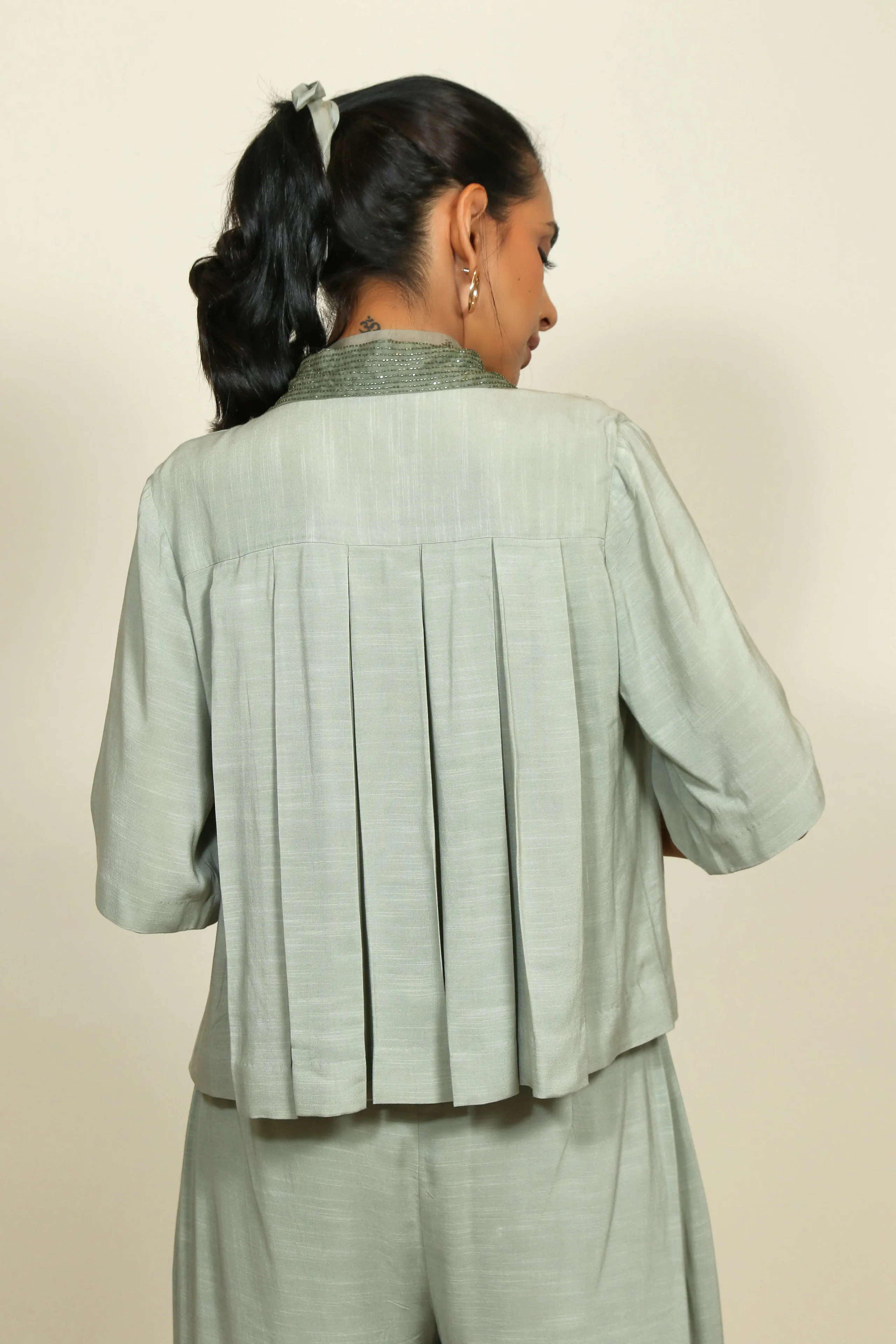
Rainforests drew from layered foliage, irregular pattern and the humid luminosity of tropical landscapes. Ivory, fresh green, peach and restrained yellow were organized into a family of placement and repeat block prints, supported by pin-tucks and tonal embroidery rather than conventional all-over ornament.
Organza became a recurring test surface for cutwork, embroidered frills, translucent lapels and pleated skirts. Cotton satin and linen grounded the lighter layers. Sampling focused on keeping cutwork edges precise, managing seam transparency and balancing the volume of double-breasted jackets, wraps, corsets and peplum forms.
From hand to cloth
04 / Method
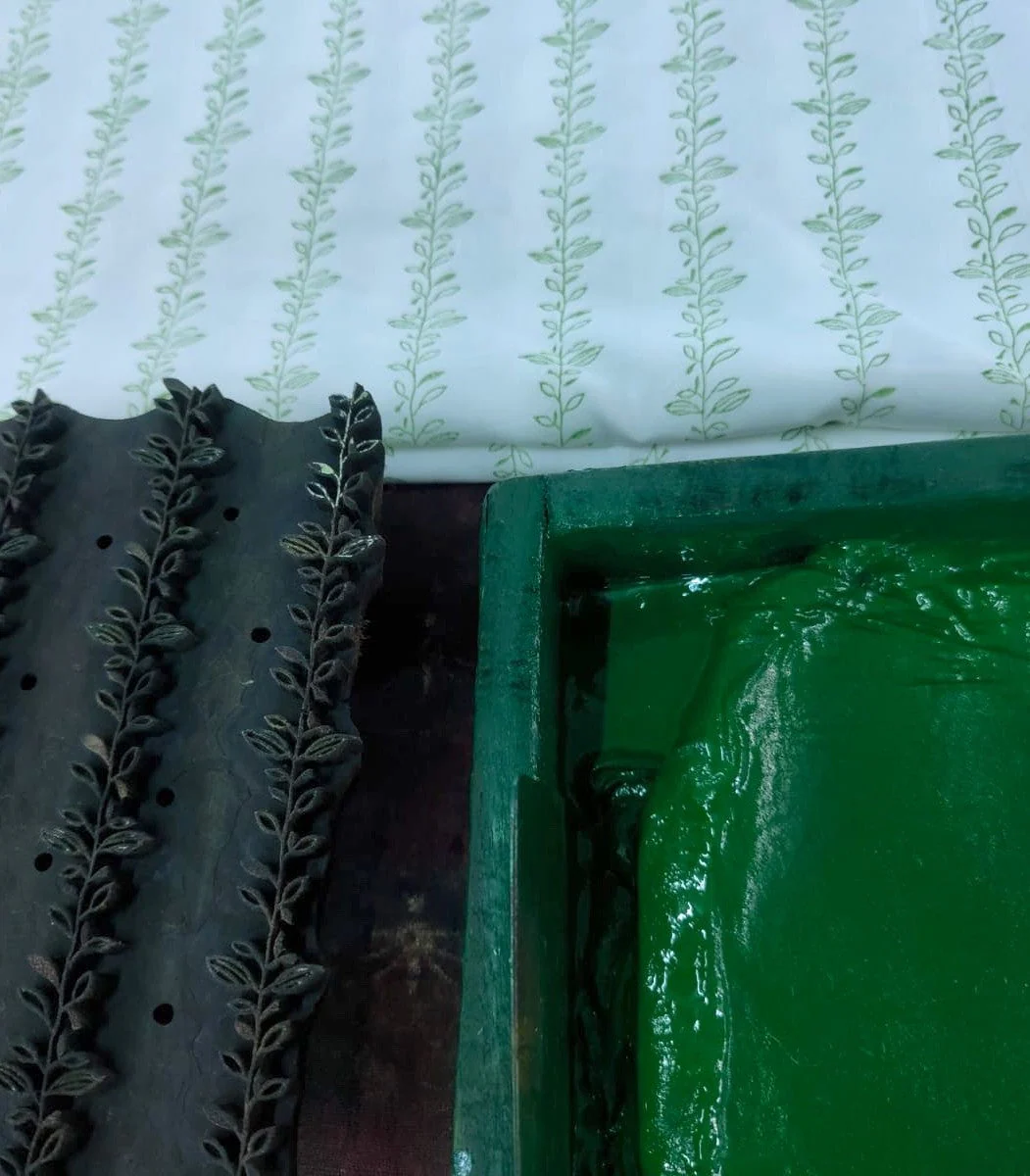
Botanical and cultural research is distilled into original illustrations before each motif is translated into a technical language: carved wooden blocks, embroidery tracings, cutwork maps or quilted line. Collaboration with artisans is part of development—not a final production step.
Hand block printing in Rajasthan requires a sequence of drawing, scale testing, block carving, seasoning, dye preparation and registration on cloth. Embroidery sampling spans Kantha, Chikankari, Zardosi, beadwork and tonal thread techniques; each is selected for its relationship to the base fabric and the intended movement of the garment.
Place, art, nature and lived detail.
Motif, palette and material direction.
Scale, stitch, drape and construction.
Fit, finish, styling and final image.
05 / End-to-end practice
Narrative research is translated into colour, material and silhouette systems before individual looks are resolved.
Original illustrations become carved blocks, placement prints and embroidery maps through iterative sampling with specialist artisans.
Drape, proportion, closure and movement are tested across toiles and material prototypes, then refined for construction and fit.
Campaign casting, styling and image sequencing extend the collection idea into a coherent visual world.
Material vocabulary
Natural fabrics are selected for structure, light transmission, surface response and movement. Irregularities in weave, print and stitch are retained as evidence of process and the maker’s hand, while sourcing, costing, sampling and production planning keep material decisions technically and commercially grounded.